

Natural Rubber Bands vs TPU Bands: Best for Long-Term B2B Storage
Time : Jul 09, 2026 View : 123
Rubber bands are small items, but in B2B supply chains they can create real costs. A carton may pass a quick stretch check on arrival, then show breakage, tackiness, or weak rebound after sea freight, summer heat, or several months in a distributor’s warehouse. For importers and wholesalers, that is not a minor quality issue. It can mean repacking work, customer claims, and slower repeat orders.
Natural rubber bands and TPU bands are often compared because both are elastic, flexible, and widely used in commercial markets. Still, they do not solve the same sourcing problem. Natural rubber bands are usually chosen for high-volume bundling and packaging. TPU bands are more suitable when color, surface finish, repeated pulling, or retail appearance matters.
VIET-Y supplies natural rubber, TPU, TPR, and latex elastic band options for different B2B applications. For packaging suppliers, supermarket distributors, office supply wholesalers, and accessory brands, the better material depends on storage time, warehouse climate, shipping route, packing method, and final use.
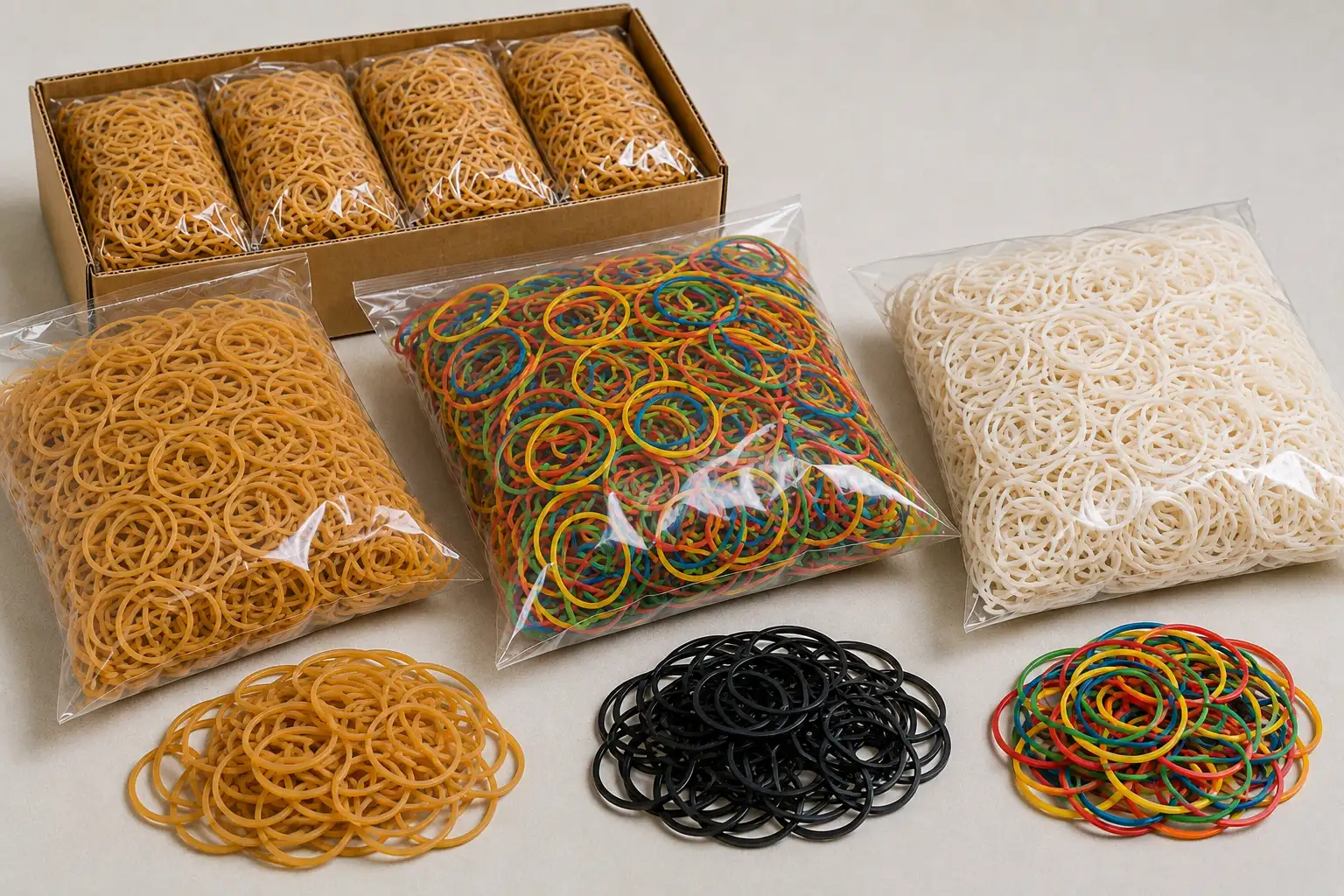
Why Long-Term Storage Changes Band Performance
Bulk rubber bands often move through several stages before use: factory warehouse, export carton, ocean container, port storage, inland transport, and local distribution. In many orders, problems do not appear during sample approval. They appear after 30–45 days of ocean freight or after cartons sit through a hot season.
ISO 2230 is commonly used as a reference for storing rubber products. Its storage principles focus on heat, light, humidity, ozone, oxygen, deformation, packaging, and shelf-life control. In warehouse terms, elastic bands should be kept in closed cartons, away from direct sunlight, damp walls, heaters, electrical motors, and heavy compression.
Common storage-related risks include:
-
Weak elastic recovery after long storage
-
Surface tackiness in hot or humid cartons
-
Brittleness or cracking during packing
-
Color change in visible elastic products
-
Band deformation from tight carton pressure
-
Higher breakage rate during fast manual use
These issues may look small at unit level, but they become expensive at carton level. A lower unit price is not always cheaper if the band creates sorting labor, customer complaints, or delayed shipments.
Natural Rubber Bands: Practical for High-Volume Bundling
Natural rubber bands remain widely used because they stretch easily, grip well, and recover strongly. In daily packaging work, that matters more than a polished surface. A vegetable bundle, office file stack, plastic bag, or warehouse carton group needs quick stretch and stable holding force.
VIET-Y’s Rubber Series covers elastic rubber band products for packaging, vegetable bundling, office use, plastic bag tying, and general commercial applications. These are typical fast-moving categories where bulk rubber bands are purchased by carton and used in large quantities.
Where Natural Rubber Bands Work Best
Natural rubber bands are a strong match for:
-
Produce and vegetable bundling
-
Office and stationery supply packs
-
Warehouse sorting and carton grouping
-
Supermarket packaging
-
Plastic bag tying
-
General wholesale distribution
For most high-volume packaging orders, natural rubber bands offer a practical balance between stretch and cost. They work best when the buyer needs reliable function, fast turnover, and stable carton supply rather than decorative appearance.
Storage Points for Natural Rubber Bands
Natural rubber can age faster under heat, UV light, ozone, oxygen, and moisture. Poor storage may cause bands to become hard, sticky, weak, or easier to break. Natural rubber can still be a solid bulk choice, but cartons need the right storage discipline: sealed bags, dry racks, and proper rotation.
For natural rubber bulk orders, procurement teams should check:
-
Sealed inner bags inside master cartons
-
Dry carton storage away from sunlight
-
FIFO stock rotation
-
No storage near motors, heaters, or damp walls
-
Avoiding heavy pallet compression
-
Sample checks before seasonal orders
Natural rubber bands are usually a better fit for fast-moving inventory. If stock may sit for several months, carton sealing and warehouse placement deserve more attention.
TPU Bands: Better for Visible and Specialty Products
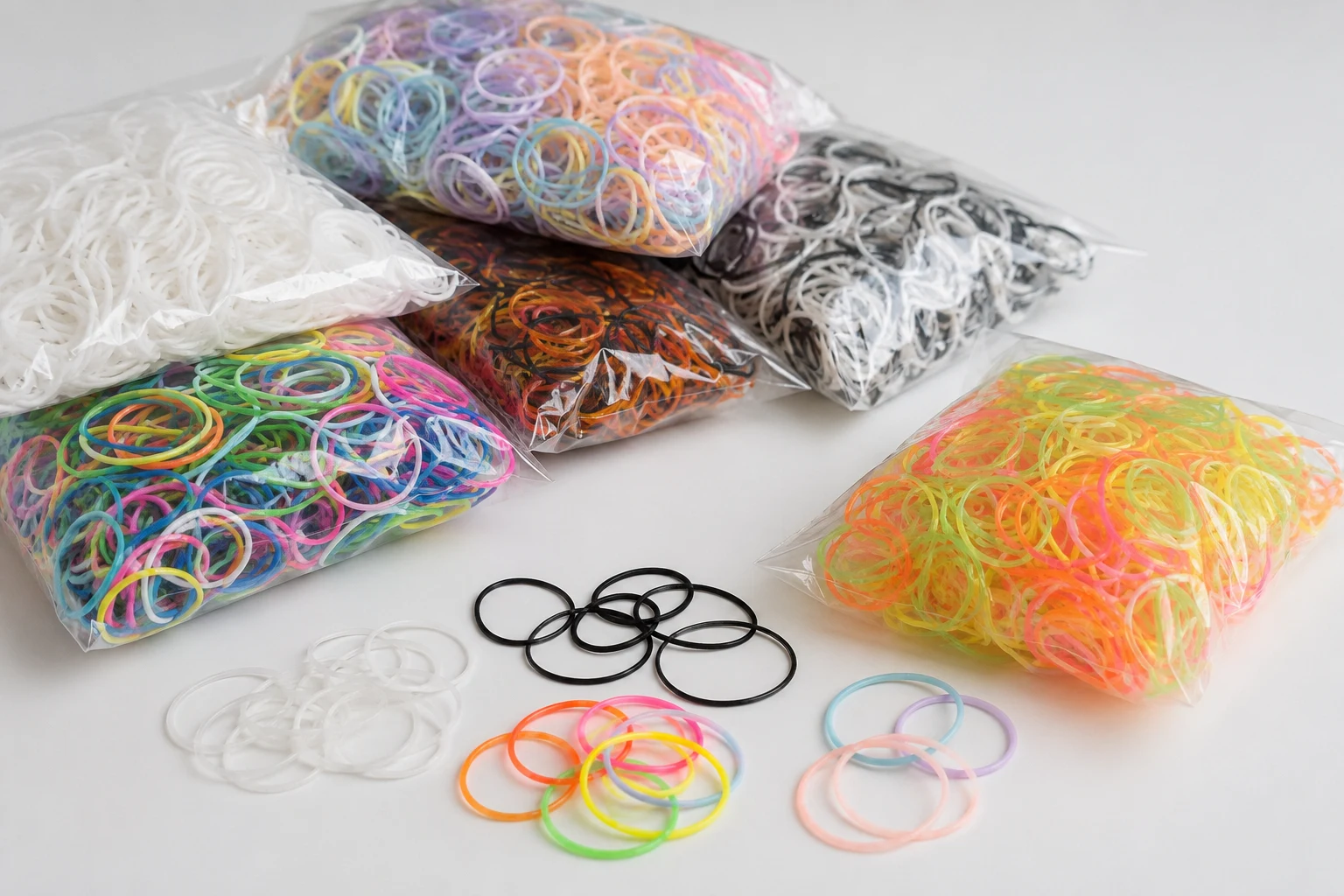
TPU bands are used in a different way. In many applications, the band is not just a temporary fastening tool. It may be part of the product itself. Hair accessories, children’s elastic bands, colorful retail products, and beauty packaging all depend on surface feel, color consistency, and appearance.
TPU, or thermoplastic polyurethane, is known for abrasion resistance, tear performance, and flexible design options. However, TPU grades vary. Some grades perform better in humid conditions, while others may need closer storage review. This is why TPU bands should be tested based on the actual market and shipping route, not only by material name.
VIET-Y’s TPU Series includes TPU rubber bands and elastic hairband products, including colorful and customized styles. This makes TPU bands a practical option for brands and distributors selling consumer-facing elastic products.
Where TPU Bands Work Best
TPU bands are commonly suitable for:
-
Hair accessories
-
Children’s elastic bands
-
Colorful retail elastic products
-
Beauty and fashion packaging
-
Customized elastic loops
-
Reusable bundling in selected applications
A hair accessory importer may care less about the lowest unit cost and more about surface smoothness, color brightness, and repeated stretch. In that case, TPU bands often make better commercial sense than standard natural rubber bands.
Storage Points for TPU Bands
TPU bands can perform well in storage, but they are not risk-free. Heat, humidity, and long shipping time may affect some TPU grades. Color products also require closer inspection because appearance is part of customer acceptance.
Before mass production, a 7–14 day warm-storage sample check is useful. It can reveal early warning signs such as weak rebound, tackiness, unusual odor, color shift, or higher breakage rate. For seasonal retail orders, this check should happen before final carton approval, not after goods are already packed.
Natural Rubber Bands vs TPU Bands: B2B Buying Comparison
| B2B Need | Better Choice | Why It Matters |
| High-volume packaging | Natural rubber bands | Better stretch-to-cost balance |
| Produce bundling | Natural rubber bands | Strong grip around uneven bundles |
| Office and warehouse use | Natural rubber bands | Practical for fast daily turnover |
| Hair accessories | TPU bands | Cleaner surface and better visual appeal |
| Colorful retail products | TPU bands | Stronger fit for custom colors |
| Humid warehouse storage | Depends on grade and packing | Both materials need storage checks |
| Long seasonal inventory | Depends on testing | Sample aging tests reduce order risk |
Natural rubber bands are usually the safer choice for large-volume functional use. TPU bands are better when the band is visible, colorful, reusable, or part of a finished consumer product.
Sample Checks Before Bulk Orders
Material choice should be confirmed with application testing. A vegetable-bundling band and a children’s hair tie should not be sourced with the same test logic.
Before confirming bulk rubber bands, buyers should review:
-
End use: packaging, produce, office supply, hair accessory, or retail display
-
Storage time: fast-moving stock or long-term inventory
-
Shipping route: short delivery or 30–45 day ocean freight
-
Warehouse climate: heat, humidity, airflow, and sunlight exposure
-
Packaging method: sealed bag, carton strength, pallet stacking, and moisture control
-
Test items: stretch recovery, breakage rate, tackiness, color change, and size consistency
-
Custom needs: diameter, thickness, color, packing format, OEM or ODM request
For natural rubber bands, the main checks should focus on elastic recovery, carton sealing, and inventory rotation. For TPU bands, buyers should add color stability, surface feel, repeated pull performance, and grade confirmation after warm storage.
How VIET-Y Supports B2B Material Selection
For buyers comparing standard bundling bands with colorful elastic products, VIET-Y supports material comparison across natural rubber, TPU, TPR, and latex product lines. This helps buyers select based on real application needs instead of using one material for every market.
Natural rubber bands can support packaging, supermarket, produce, office, and warehouse channels. TPU bands can support hair accessories, colorful elastic products, customized loops, and retail packaging. Buyers may also review TPR rubber band material properties and latex options when flexibility, product feel, or price level becomes part of the sourcing plan.
VIET-Y can assist B2B customers with sample confirmation, size selection, color customization, packing format discussion, and bulk order matching. For long-term inventory or humid-market shipments, buyers can compare samples by material, size, color, packing format, and end use before mass production. This step helps reduce avoidable storage risk and makes repeat orders easier to control.
Conclusion
Natural rubber bands and TPU bands both have value in B2B storage, but they serve different buying needs. Natural rubber bands are usually better for high-volume packaging, produce bundling, office supplies, and warehouse use where stretch and cost control matter most. TPU bands are better for hair accessories, colorful retail products, customized elastic loops, and applications where surface quality matters.
Long-term performance depends on material grade, packaging, warehouse condition, shipping route, and stock rotation. Sample testing before mass production can reduce storage risk and improve order consistency.
For buyers comparing bulk rubber bands, natural rubber bands, and TPU bands for specific markets, VIET-Y can provide samples, material suggestions, and customized elastic band solutions for B2B orders.
FAQ
Q1: Are natural rubber bands better than TPU bands for long-term B2B storage?
A: Natural rubber bands fit bulk packaging better. TPU bands fit visible, colorful, or reusable elastic products.
Q2: What affects the storage life of bulk rubber bands?
A: Heat, moisture, ozone, light, tight compression, and slow stock rotation are common aging risks.
Q3: Are TPU bands suitable for humid warehouse conditions?
A: They can be, but TPU grade, packaging, and warehouse humidity should be checked through sample aging tests.
Q4: What should buyers test before ordering natural rubber bands or TPU bands?
A: Stretch recovery, breakage rate, tackiness, color change, size consistency, carton packing, and compression after storage.
Q5: Can VIET-Y supply different band materials for B2B markets?
A: Yes. VIET-Y offers natural rubber, TPU, TPR, and latex options for different B2B applications.

Latest News
-
Jun. 04, 2026TPU Elastics Safety & Compliance for B2B Food and Hygiene Packaging 2026VIET-Y offers high elastic food grade TPU rubber bands with FDA and EU compliance for food and hygiene packaging. Superior durability, abrasion resistance and safety. Contact us for samples and bulk custom solutions.
-
Jun. 04, 2026Customizable Rubber Bands: Key to B2B Organization and Efficiency in 2026VIET-Y specializes in high-elasticity natural rubber bands and customizable elastic bands for B2B logistics, offices, and supply chains. Durable, color-coded solutions with strong rebound deliver reliable performance and workflow efficiency. Contact us for a free quote.
-
May. 28, 2026Reliable Wholesale Rubber Band Suppliers: B2B Sourcing Guide 2026VIET-Y offers reliable wholesale rubber band solutions with strict quality control, OEM/ODM capability, timely delivery, and ISO certification. This B2B sourcing guide helps buyers select trusted suppliers for sustainable supply chains in 2026.


