

Color-Coded Smart Logistics Bands for Accurate Inventory | VIET-Y 2026
Time : Jul 09, 2026 View : 108
Inventory mistakes often begin with small handling issues. A returned item is placed near approved stock. Two similar SKUs sit in the same tote. The digital record may still look correct, but the physical workflow has already become less reliable.
For B2B warehouses, 3PL operators, distributors, manufacturers, and e-commerce fulfillment centers, inventory management depends on both digital tracking and visible floor-level control. Barcodes, cartons, bins, labels, and color-coded rubber bands all help staff identify products faster during receiving, sorting, picking, packing, and returns.
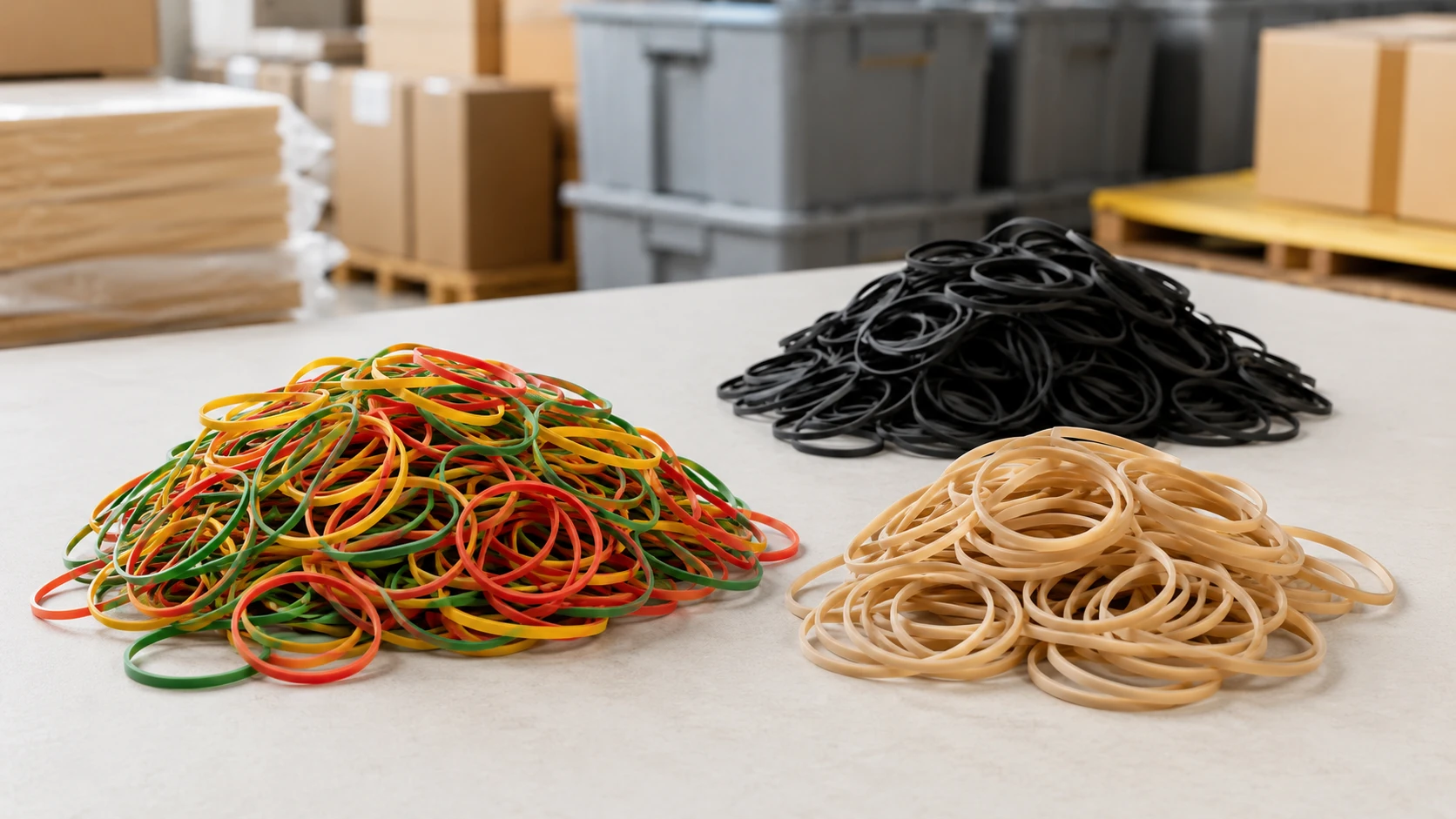
Color-coded rubber bands provide a simple visual control method. They secure products while showing inventory status. A red band may indicate urgent orders. A green band may mark approved stock. A yellow band may show items waiting for inspection. These small signals help reduce confusion before goods move to the next process.
VIET-Y supplies custom rubber bands for logistics, packaging, office, industrial, and supply chain applications. With Rubber Series, TPU Series, TPR Series, and Latex Series options, VIET-Y supports B2B buyers needing color-coded logistics bands matched to real inventory workflows.
Why Color-Coded Rubber Bands Matter in Inventory Management
Warehouse systems record SKU codes, batch numbers, order status, and storage locations. However, staff still handle physical goods under time pressure. When products look similar, a clear color cue helps teams separate items, mark status, and keep related products together.
Color-coded rubber bands are especially useful in high-SKU environments where small items move through several teams. They do not replace barcode systems, RFID labels, or warehouse management software. Instead, they add a visible layer that makes physical stock easier to recognize and separate.
Inventory Problems They Help Address
Common warehouse issues include:
-
Similar SKUs mixed in one storage bin
-
Return items placed near approved inventory
-
Accessories, labels, or manuals separated from products
-
Old and new batches stored too closely
-
Small parts becoming loose during internal handling
Color-coded rubber bands help group products, mark stock status, and support cleaner movement through the warehouse process.
What Color-Coded Logistics Bands Are
Color-coded logistics bands are rubber or elastic bands made in selected colors, sizes, widths, thicknesses, and materials for warehouse and supply chain use. Their value is not limited to bundling. They also communicate meaning.
A standard rubber band holds products together. A color-coded logistics band holds products together and helps staff recognize what the bundle represents. For procurement teams, the band must fit the bundle, remain visible, hold tension, and stay consistent across repeat orders.
Key Specifications for Custom Rubber Bands
A logistics band used for inventory management must meet both performance and visual requirements. If the band breaks, loosens, fades, or changes color between batches, the warehouse rule becomes less reliable.
Size, Width, Thickness, and Stretch Fit
Rubber band sizing should match the actual bundle, not only a general product category. Buyers should confirm flat length or diameter, width, thickness, and expected stretch range before sampling.
A small accessory kit may need a narrow band with moderate tension. A document bundle or light carton group may need a wider band for better visibility and holding force. Oversized bands may slip. Undersized bands may break or deform packaging.
Elasticity, Rebound, and Break Resistance
Elasticity affects how well the band stretches around products. Rebound affects whether it returns to shape after use. Break resistance matters when bands are used repeatedly or wrapped around irregular items.
For warehouse rubber bands, stable tension is important. A weak band may loosen on storage racks, causing scattered kits, mixed parts, or extra rework.
Color Consistency for SKU and Batch Control
Color is not decoration in an inventory system. It is a working rule. If one batch of orange bands looks too close to red, staff may misread the status.
B2B buyers should confirm approved color samples before bulk production. For repeat orders, color consistency should remain part of the quality requirement.
Material and Packing Requirements
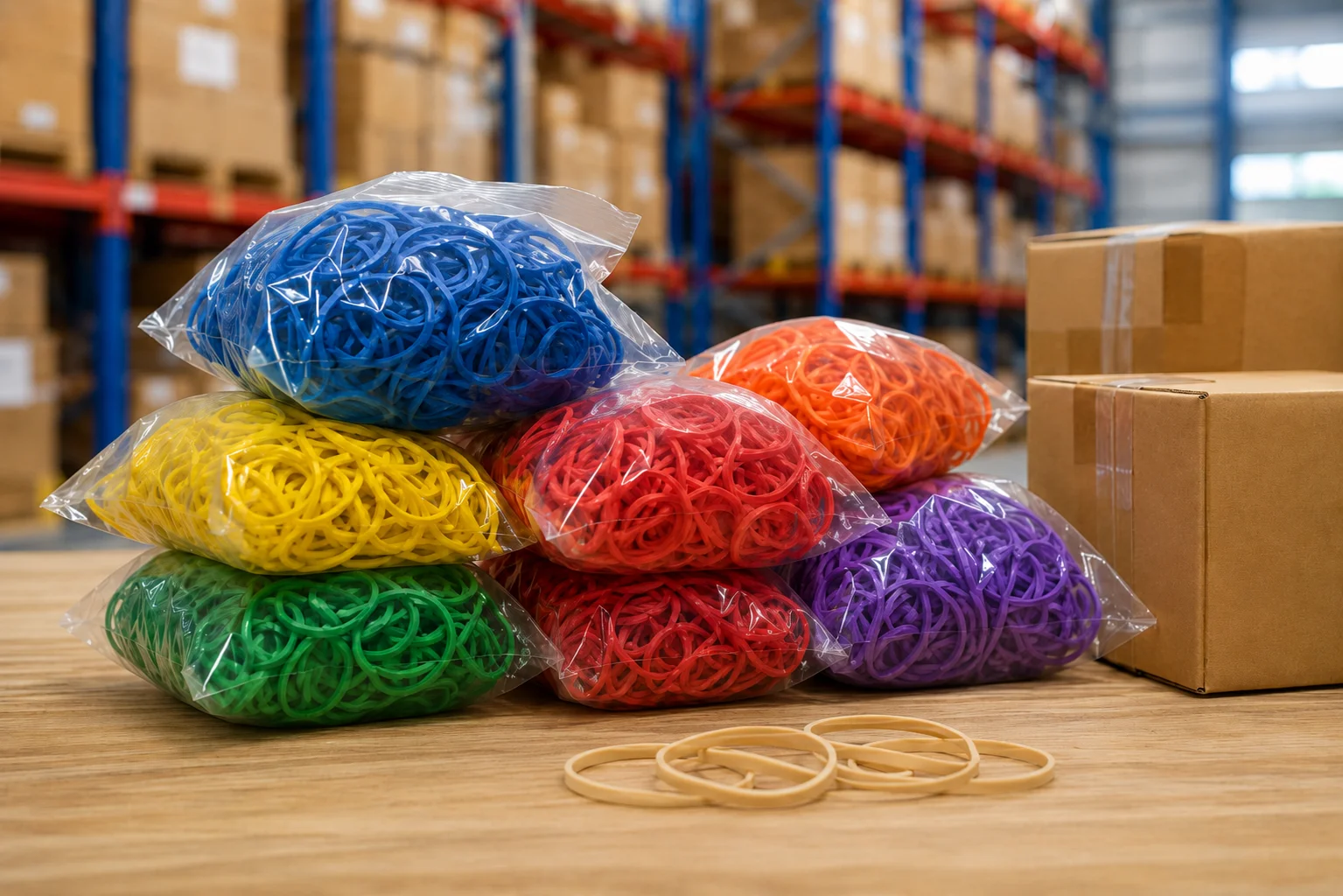
VIET-Y offers Rubber Series, TPU Series, TPR Series, and Latex Series products. Different materials can be selected according to elasticity, toughness, surface feel, reusability, and application environment.
| Specification | Why It Matters | Procurement Notes |
| Color | Shows SKU, batch, zone, or status | Confirm approved color samples |
| Flat length or diameter | Fits the actual bundle | Match product size and stretch range |
| Width | Affects visibility and holding force | Wider bands are easier to identify |
| Thickness | Impacts durability and pull strength | Match load and handling frequency |
| Material | Controls stretch, rebound, and feel | Select Rubber, TPU, TPR, or Latex |
| Packaging | Supports warehouse replenishment | Bulk bags, cartons, or OEM packs |
Practical Applications in B2B Logistics
Color-coded rubber bands work best where goods move quickly and need temporary grouping. They are suitable for small parts, accessories, samples, repair kits, documents, labels, and light industrial components.
Warehouse SKU Bundling
Small parts are easy to mix. Color-coded rubber bands can group items by SKU family, customer order, batch, or warehouse zone. This helps reduce loose stock and supports faster picking.
E-Commerce and 3PL Order Sorting
A 3PL warehouse may handle urgent orders, standard orders, replacement shipments, and returns during the same shift. Color-coded logistics bands help separate these flows before final packing.
A practical system may use:
-
Red for urgent orders
-
Blue for standard stock
-
Yellow for inspection
-
Black for returns or hold items
-
Green for approved inventory
The color system should stay simple. Too many colors can create new confusion.
Manufacturing Batch Control
Manufacturers can use rubber bands to group work-in-progress components, inspection batches, or assembly-line kits. This is useful when parts look similar but cannot be substituted.
Returns and Hold Stock
Return handling needs clear separation. A fixed return color helps warehouse staff identify hold items before they are inspected and moved back into approved stock.
Quality Checks for Repeat B2B Orders
For B2B procurement, quality control should cover both physical performance and visual consistency. A color-coded system only works when every order matches the approved sample.
Sample Confirmation Before Bulk Production
Before mass production, buyers should confirm color, size, elasticity, material feel, and packaging format. For OEM/ODM orders, artwork, carton marks, inner bags, and private-label details should also be approved.
Inspection Points for Color-Coded Rubber Bands
Professional sourcing checks may include:
-
Color comparison against approved samples
-
Flat length, width, and thickness inspection
-
Stretch and rebound review
-
Pull-strength or breakage testing based on use
-
Surface and edge inspection
-
Packing quantity verification
-
Carton marking review
-
Batch consistency before shipment
These checks reduce the risk of inconsistent stock arriving across repeat orders.
Procurement Checklist for Custom Rubber Bands
A clear specification sheet helps suppliers quote faster and produce samples more accurately.
| Buyer Requirement | Details to Prepare |
| Color system | Number of colors and meaning |
| Band size | Flat length, diameter, width, thickness |
| Application | SKU bundling, returns, batch control, packing |
| Material | Rubber, TPU, TPR, Latex, or recommendation |
| Load condition | Light-duty, medium-duty, repeated-use |
| Packaging | Bulk bags, cartons, workstation packs |
| Branding | Logo, private label, carton mark |
| Order plan | Trial quantity, repeat volume, delivery schedule |
Why VIET-Y Fits B2B Inventory Band Projects
VIET-Y provides rubber band solutions across Rubber Series, TPU Series, TPR Series, and Latex Series. The brand supports ODM/OEM service for buyers that need custom color matching, size adjustment, packaging formats, and application-based material selection.
For logistics and inventory projects, buyers need more than a low-cost band. They need consistent color, stable elasticity, suitable packing, sample confirmation, and repeat supply. VIET-Y’s published B2B sourcing information highlights strict quality control, OEM/ODM capability, timely delivery, and ISO certification, making the brand suitable for wholesale rubber band and custom logistics band purchasing.
Conclusion
Color-coded rubber bands give B2B warehouses a practical way to make inventory status more visible on the floor. They help separate similar SKUs, mark inspection results, group batches, identify returns, and support cleaner picking and packing routines.
For procurement teams, the right logistics band should be selected by color, flat length, width, thickness, material, pull strength, packaging format, and repeat-order consistency—not price alone.
VIET-Y supports custom rubber bands, bulk rubber bands, and OEM/ODM logistics band solutions for inventory management, warehouse sorting, manufacturing, and distribution needs.
Contact VIET-Y with the required color system, band size, material preference, packaging method, and estimated order volume to request a custom quote.
FAQ
Q1: Can VIET-Y customize colors for warehouse coding systems?
A: Yes. VIET-Y can match approved color samples for SKU grouping, batch control, inspection status, and return handling.
Q2: What details are needed for a custom rubber band quote?
A: Provide color, size, width, thickness, material, application, packaging method, order quantity, and OEM/ODM branding needs.
Q3: Does VIET-Y support bulk rubber band packaging?
A: Yes. Bulk cartons, inner bags, workstation packs, and OEM packaging can be discussed based on warehouse use and order volume.
Q4: Which VIET-Y material series suits logistics use?
A: Rubber, TPU, TPR, and Latex series can be selected based on elasticity, toughness, surface feel, and application environment.
Q5: Can samples be confirmed before bulk production?
A: Yes. Sample confirmation can cover color, size, elasticity, material feel, packaging format, and application fit before bulk orders.

Latest News
-
Jun. 04, 2026TPU Elastics Safety & Compliance for B2B Food and Hygiene Packaging 2026VIET-Y offers high elastic food grade TPU rubber bands with FDA and EU compliance for food and hygiene packaging. Superior durability, abrasion resistance and safety. Contact us for samples and bulk custom solutions.
-
Jun. 04, 2026Customizable Rubber Bands: Key to B2B Organization and Efficiency in 2026VIET-Y specializes in high-elasticity natural rubber bands and customizable elastic bands for B2B logistics, offices, and supply chains. Durable, color-coded solutions with strong rebound deliver reliable performance and workflow efficiency. Contact us for a free quote.
-
May. 28, 2026Reliable Wholesale Rubber Band Suppliers: B2B Sourcing Guide 2026VIET-Y offers reliable wholesale rubber band solutions with strict quality control, OEM/ODM capability, timely delivery, and ISO certification. This B2B sourcing guide helps buyers select trusted suppliers for sustainable supply chains in 2026.


