

E-Commerce Packaging Rubber Bands: VIET-Y OEM Supply for 2026
Time : Jun 18, 2026 View : 136
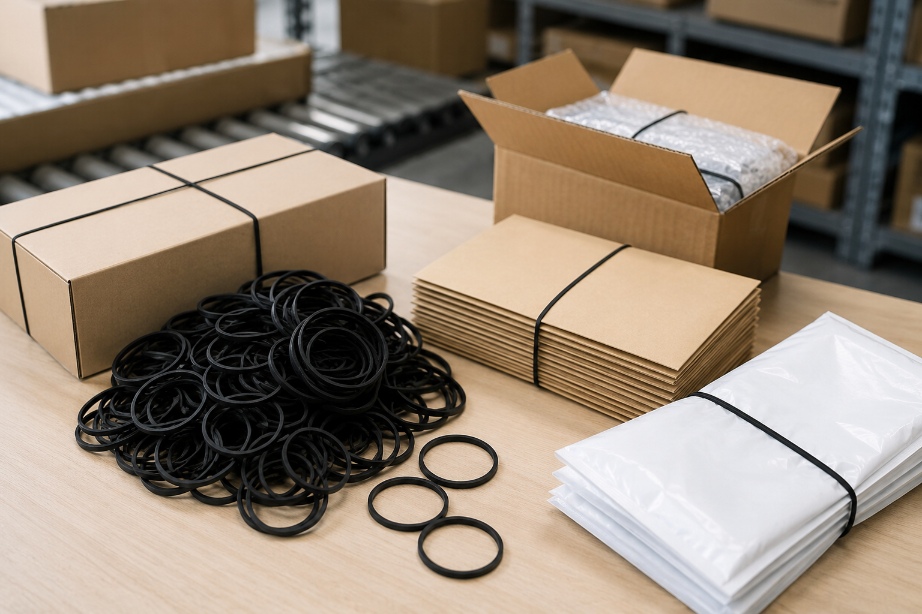
E-commerce packaging is getting faster and leaner. In that kind of workflow, small packing materials matter more than they look. Packaging rubber bands are one of those quiet items that help warehouse teams group products, hold labels, bundle returns, sort accessories, and keep loose items together before final carton packing.
The global e-commerce packaging market is expected to keep growing in 2026, driven by high parcel volume, faster delivery expectations, and stronger demand for sustainable packaging. For 3PL warehouses, shipping supply distributors, and private-label packaging brands, rubber bands bulk supply is not only about cost. It is also about daily packing speed, breakage control, stock stability, and OEM flexibility.
VIET-Y supplies high-elasticity natural rubber bands and supports OEM/ODM customization for B2B buyers, including size, color, pull strength, and packing needs. For e-commerce packaging buyers preparing for 2026 logistics growth, custom rubber bands can become a simple, useful, and low-waste part of the packing system.
Why E-Commerce Fulfillment Needs Better Small Packaging Materials
Faster order cycles increase daily consumable use
E-commerce fulfillment centers now process thousands of small parcels each hour. Every order often calls for fast bundling, labeling, or short-term holding ahead of shipment. With automation on the rise, the demand for dependable and straightforward consumables such as packaging rubber bands grows clearer. These small items play a steady yet key part in maintaining steady workflows when sales hit peak levels.
Warehouses need simple tools for bundling and sorting
Along high-speed picking lines, staff turn to tools that feel familiar and work the same way each time. Rubber bands go on quicker than tape or straps when grouping light items like accessories, cables, or stationery. They can be applied again across several shifts, which cuts down on waste and lowers cost per order cycle.
Low-cost packaging items still affect labor speed and order accuracy
Although rubber bands carry low individual value, weak stretch or uneven sizes can slow packers down. That is why steady OEM quality counts, especially for bulk buyers who count on the same performance across millions of uses each month.
How Packaging Rubber Bands Fit E-Commerce Operations
Product bundling for small goods, accessories, and kits
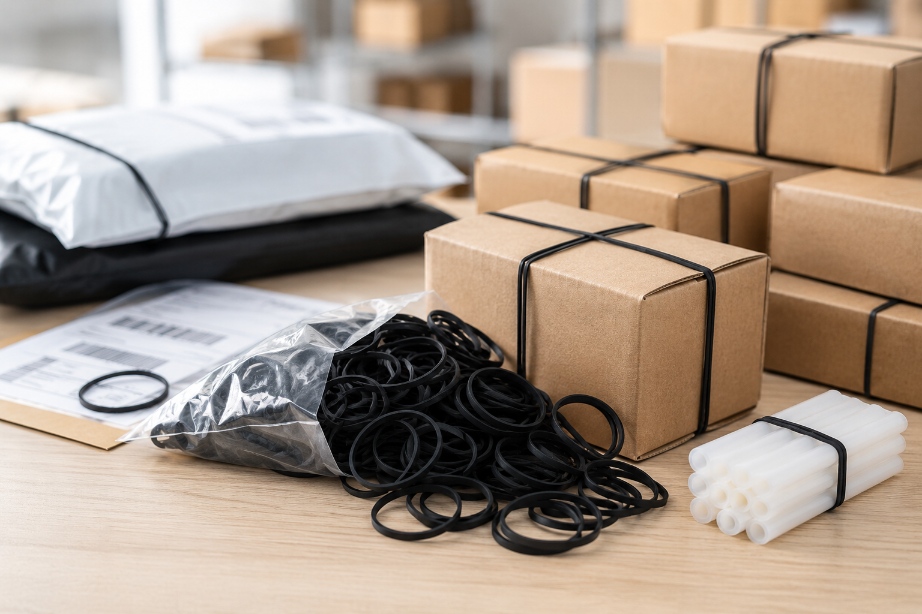
Rubber bands keep multi-item orders together, such as phone chargers paired with adapters or beauty kits with several bottles. They hold sets in place without adding much extra weight to the package.
Order grouping before carton packing or dispatch
Before final boxing or labeling, pickers can apply color-coded packaging rubber bands to show different shipping zones or carriers. This gives a quick visual signal that supports smooth sorting.
Document, label, and return-item organization
Return areas often deal with mixed paperwork and product groups. Rubber bands let teams bind invoices or return labels for a short time without adhesives that might harm documents.
Temporary holding for warehouse picking and sorting
Because they can be used more than once, rubber bands work well for brief holding tasks that keep bundles together between picking stations or during batch scans.
2026 Packaging Trends Driving Rubber Band Demand
High-volume fulfillment and micro-fulfillment growth
The move toward micro-fulfillment centers brings smaller spaces with quicker turnover. Consumables must stay compact, flexible, and simple to restock in large amounts.
Sustainable packaging choices and reduced plastic waste
Rubber bands made from natural materials cut reliance on single-use plastics. This gives a workable option over disposable plastic ties in warehouses that focus on sustainability.
Packaging efficiency under rising labor and freight pressure
Labor costs keep climbing around the world. A well-chosen rubber bands bulk supply helps avoid pauses caused by material shortages and keeps daily routines steady.
Private-label packaging supply for distributors and brands
Packaging distributors now look for private-label consumables that match their own branding plans. OEM partnerships make this possible through custom production runs.
Key Product Requirements for E-Commerce Packaging Rubber Bands
E-commerce packaging work is high-frequency. A band that feels fine for ten uses may fail when used thousands of times per day. B2B buyers should look beyond the surface.
Consistent Elasticity
Packaging rubber bands should stretch smoothly and return without losing grip too quickly. Some bands snap. Some feel too loose. Some are hard to stretch. None of that helps packing speed.
Proper Size Range
A small product bundle needs a different band from a carton of accessories or a stack of documents. Size selection should match the object, not just the buyer’s old purchase record.
Suitable Thickness and Pull Strength
Thin bands are good for light items and paper grouping. Thicker bands fit heavier bundles or warehouse use where handling is rougher. Overbuying thickness can waste material, while underbuying creates breakage.
Color Options
Color is not only for looks. In fulfillment centers, colors can support sorting by order type, product line, inspection status, or customer category. For private-label brands, colors can also match packaging design.
Bulk Packing Format
For high-volume operations, packaging format matters. Bags, cartons, inner packs, and warehouse-ready bulk cases should fit the buyer’s storage and distribution process.
OEM Strategies for Packaging Rubber Bands
Custom rubber bands for brand packaging programs
Private-label brands often ask for color-matched custom rubber bands that reflect their identity while still meeting industrial performance needs.
Size and color matching for specific fulfillment workflows
Different e-commerce categories—from apparel to electronics—call for distinct band sizes. VIET-Y supports tailored production runs that match SKU-level needs.
Carton, bag, and bulk packing formats for distributors
Bulk buyers prefer carton-packed units that fit palletized storage systems efficiently. Customized Logo enables distributors to offer branded supply lines under their own labels.
Private-label supply for packaging and shipping supply brands
OEM flexibility allows resellers to grow their catalog without extra production investment—ideal for B2B e-commerce platforms serving fulfillment clients worldwide.
Natural Rubber Bands vs Other Packaging Fasteners
Rubber bands compared with plastic ties and tape
Rubber bands can be reused and leave no residue the way tape does. They also remove the cutting step that plastic ties require, which saves seconds per package across thousands of orders each day.
Reusable and removable holding for warehouse handling
Featuring high toughness and exceptional elasticity, these bands can expand up to seven times their original length without snapping, making them ideal for repeated use within the same shift cycle without loss of tension.
Better fit for temporary bundling and order grouping
Unlike adhesive tapes that must be thrown away after one use, rubber bands can move through several workflow stages before they are recycled or reused inside the operation.
When tape, straps, or cartons are still needed
For heavy shipments or sealed boxes that need tamper evidence, traditional materials stay necessary, yet rubber bands work alongside these tools instead of replacing them outright.
Why Rubber Bands Bulk Supply Matters for 3PL and E-Commerce Buyers
Seasonal order peaks require stable inventory
During events like Black Friday or Lunar New Year sales spikes, even small shortages of consumables can slow throughput across distribution centers.
Bulk cases reduce purchasing interruptions
By sourcing rubber bands bulk, buyers keep packing activity running without frequent reordering cycles, which matters in just-in-time logistics models.
Consistent quality lowers breakage during packing
Changing elasticity can cause rework if bundles snap mid-process. Stable OEM production keeps tensile strength the same from one batch to the next.
Supplier reliability matters during sales campaigns and holidays
A partner like VIET-Y provides predictable lead times—offering 3 working days for in-stock items and 10–15 working days for custom colors and sizes—helping fulfillment teams plan ahead with confidence.
How VIET-Y Supports E-Commerce Packaging Buyers
VIET-Y positions itself as an OEM manufacturer focused on B2B-scale output rather than retail-level sales. Their factory capabilities include:
-
OEM rubber band manufacturing adaptable to client specifications.
-
Bulk supply suitable for fulfillment centers managing thousands of SKUs.
-
Custom sizes, colors, and private-label branding options.
-
Product matching designed around parcel-packing workflows used by major e-commerce players.
Buying Checklist for E-Commerce Packaging Rubber Bands
-
Confirm main use — bundling, sorting, returns, document grouping, or kit packing
-
Choose appropriate band size based on typical product dimensions.
-
Verify elasticity range (should stretch up to seven times its length).
-
Select colors aligned with warehouse identification codes or brand palettes.
-
Plan bulk volume around seasonal demand forecasts to avoid urgent restocks.
This structured approach helps procurement teams standardize consumables across multiple sites while maintaining cost control through bulk purchasing programs.
Conclusion
E-commerce operations heading into 2026 will continue to focus on speed, sustainability, and simplicity at scale. The humble packaging rubber band fits well into this picture—it is reusable, lightweight, inexpensive, yet essential in every fulfillment process from sorting bins to outbound docks.
For logistics managers seeking reliable rubber bands bulk suppliers with OEM flexibility, VIET-Y offers proven manufacturing capacity backed by high-quality natural materials. Their ability to deliver custom rubber bands tailored to specific workflows supports not just operational efficiency but also private-label growth opportunities across the global packaging market. Contact VIET-Y for detailed product specifications, samples, and partnership inquiries.
FAQs
Q1: What are packaging rubber bands used for in e-commerce fulfillment?
Packaging rubber bands are used for bundling small products, grouping orders before carton packing, securing documents during returns processing, and supporting quick warehouse sorting tasks prior to dispatch.
Q2: Why do e-commerce warehouses buy rubber bands bulk?
Because it minimizes stockouts during peak demand seasons while maintaining consistent quality across large-scale operations where daily consumption is high.
Q3: Can custom rubber bands be produced under private labels?
Yes. Custom rubber bands can be manufactured in various sizes and colors with branded logos or packaging formats suitable for distributors’ private-label programs through VIET-Y’s OEM services.
Q4: Are natural rubber bands better than plastic ties?
Natural rubber bands offer reusability and flexibility without leaving adhesive residue; they’re ideal for temporary bundling compared with single-use plastic ties that generate more waste.
Q5: How does VIET-Y support OEM buyers?
VIET-Y supports OEM buyers through customized production runs—covering size selection, color matching, logo printing.

Latest News
-
Jun. 04, 2026TPU Elastics Safety & Compliance for B2B Food and Hygiene Packaging 2026VIET-Y offers high elastic food grade TPU rubber bands with FDA and EU compliance for food and hygiene packaging. Superior durability, abrasion resistance and safety. Contact us for samples and bulk custom solutions.
-
Jun. 04, 2026Customizable Rubber Bands: Key to B2B Organization and Efficiency in 2026VIET-Y specializes in high-elasticity natural rubber bands and customizable elastic bands for B2B logistics, offices, and supply chains. Durable, color-coded solutions with strong rebound deliver reliable performance and workflow efficiency. Contact us for a free quote.
-
May. 28, 2026Reliable Wholesale Rubber Band Suppliers: B2B Sourcing Guide 2026VIET-Y offers reliable wholesale rubber band solutions with strict quality control, OEM/ODM capability, timely delivery, and ISO certification. This B2B sourcing guide helps buyers select trusted suppliers for sustainable supply chains in 2026.


