

Rubber Band Ball Promotional Gift Projects: How B2B Buyers Can Plan Wholesale Rubber Band Orders
Time : Aug 14, 2026 View : 82
Rubber band ball projects can turn a familiar office item into an interactive asset for trade shows, employee programs, classroom activities, and branded event kits. B2B planning must define the assembly model, material specification, quantity, packaging, quality controls, and delivery schedule before production. The core purchase in this sourcing model is the elastic material used by an internal team, contract packer, educational-kit assembler, or event participant. VIET-Y is a Yiwu-based rubber products manufacturer and rubber band factory established in 2010, offering Rubber, TPU, TPR, and Latex series together with OEM/ODM and export-service capabilities.
Match the Promotional Concept to a Commercial Use Case
Brand Campaigns and Corporate Programs
A rubber band ball promotional gift project works best when the activity supports a defined campaign objective. At a trade show, pre-counted bands can form part of an engagement challenge. In an employee program, bulk rubber bands for office gift kits can support team-building or departmental color coding. Distributor meetings may combine the material with an instruction card and QR code. The sourcing brief should state whether assembly occurs before distribution or during the event, because that decision affects labor, packing density, freight volume, and band count.
Children’s Activities and Educational Kits
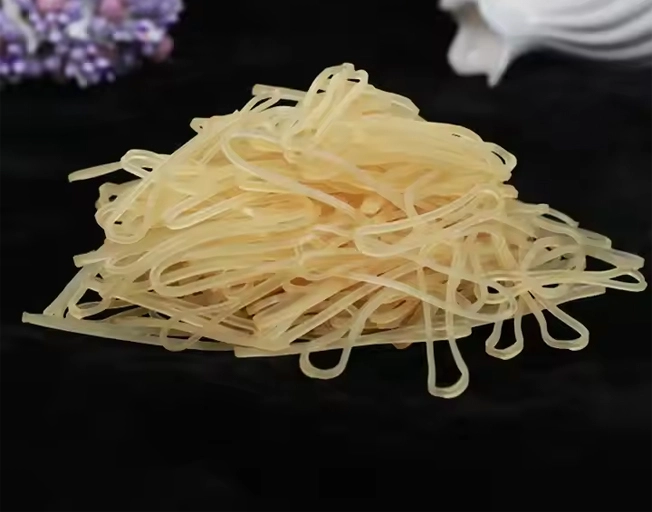
Wholesale colored rubber bands for classroom activities can support counting, sorting, color recognition, and supervised construction tasks. Procurement teams should define the intended age group, instructional purpose, session duration, pack quantity, and supervision model before requesting a quotation.
Children’s projects require a separate compliance review. In the United States, products intended for children under three can be prohibited when small parts create choking, aspiration, or ingestion hazards; marketing and foreseeable use influence age classification.
Convert the Idea into a Procurement Specification
Define the Assembly and Packing Model
Three operating models are common. Buyer-assembled programs receive bulk material for local counting and packing. End-user projects place bands directly into activity kits for on-site construction. Third-party programs send wholesale rubber bands to a contract packer that adds instructions, inserts, labels, or cartons.
The RFQ should separate confirmed requirements from optional services. Pre-counted bags, mixed-color packing, private labels, starter cores, and kit assembly should appear as individual line items.
Calculate the Order from Usage Data
Quantity planning should begin with a tested number of bands per project, not only the number of recipients:
Total bands = planned packs × bands per pack + reserve quantity
A pilot build can establish the average count for the target size. The reserve should cover counting tolerance, damaged packs, overattendance, replacement stock, and multi-location redistribution. Piece requirements must also be converted into kilograms, bags, or cartons.
A custom color rubber bands bulk order becomes more accurate when every color has a defined percentage. “Mixed colors” is not a production specification; a usable brief states the required ratio, shade tolerance, packaging unit, and quantity for each color.
Specify Material and Performance Requirements
Document Dimensions and Elastic Behavior
The technical sheet should include material, flat length or diameter, width, thickness, color, unit weight where relevant, and dimensional tolerance. The stretch range and recovery behavior should reflect the actual assembly process.
ASTM D412 covers tensile-property evaluation for vulcanized thermoset rubber and thermoplastic elastomers. A quality plan may use supplier data, agreed internal methods, or third-party testing, but the method should remain consistent across approval and production lots.
Test the Complete Application
Single-band stretching does not reproduce the repeated loading involved in building a rubber band ball. Sample evaluation should include continuous wrapping, mixed-size interaction, breakage, surface friction, rebound, odor, color transfer, and shape retention after a defined rest period.
The approved reference should record the specification, color ratio, count per pack, packaging configuration, label position, and carton arrangement. This reference becomes the commercial standard for production inspection and repeat orders.
Control Color, Packaging, and Brand Presentation
Approve Physical Color References
Custom promotional rubber bands for corporate events often depend on visual consistency. Pantone references, signed physical samples, or approved production swatches provide stronger controls than screen images. The purchase specification should define whether approximate matching is acceptable and whether separate colors may vary within an agreed tolerance.
Complex logos and campaign messages are generally better placed on cards, labels, sleeves, or outer packaging, separating elastic performance from graphic communication.
Design Packaging for the Supply Chain
Packaging should reflect the next operational step. Bulk bags suit local assembly. Pre-counted inner packs support event distribution. Color-separated bags simplify local mixing, while mixed packs reduce handling at the destination.
A rubber band supplier for promotional products should receive carton marks, destination allocation, pack counts, barcode needs, and pallet requirements before mass production.
Build Quality Assurance into the Purchase Order
Establish Inspection Criteria
Inspection criteria may include dimensions, color consistency, packing count, gross and net weight, visible defects, contamination, odor, application-test breakage, and carton integrity. Sampling levels and acceptance rules should be agreed before production, especially for promotional merchandise rubber band orders tied to fixed event dates.
Batch identification supports traceability through production dates, lot numbers, approved-sample references, and carton counts.
Plan Storage and Inventory Rotation
Rubber products require controlled storage planning. ISO lists ISO 2230 as the guideline for storage of rubber products, making storage conditions, packaging protection, and inventory age relevant to a purchasing specification.
Warehouse instructions should limit exposure to heat, light, ozone sources, contamination, and prolonged deformation. First-in, first-out rotation supports repeat campaigns.
Manage Compliance, Logistics, and Delivery Risk
Address Material Disclosure and Market Rules
Natural rubber latex may cause allergic reactions in sensitive individuals, so material declarations and intended-use labeling require attention where latex is present. FDA guidance for medical products highlights the importance of accurate natural-rubber-latex statements and warns against unsupported “latex-free” claims; promotional products fall under different rules, but accurate material disclosure remains a sound procurement principle.
Compliance responsibilities depend on the destination market, age grading, presentation, and intended product category.
Work Backward from the Delivery Date
The project schedule should include specification approval, color sampling, pilot assembly, production, inspection, packing, export documentation, transportation, customs clearance, local assembly, and final distribution. Sea, air, land, and multimodal transportation can serve different cost and timing requirements, while order processing, warehouse management, and inventory monitoring may form part of a broader supply-chain plan.
FAQ
Are Finished Rubber Band Balls Required?
No. Many B2B programs purchase rubber bands for DIY promotional kits and complete assembly internally, through a contract packer, or during the event.
What Information Is Needed for a Wholesale Quotation?
A complete RFQ includes intended use, material, dimensions, colors, color ratios, estimated quantity, packing unit, labeling needs, destination, delivery deadline, sample requirements, and inspection criteria.
How Should the Quantity per Activity Pack Be Determined?
A pilot build should establish the average number of bands needed for the target size and user experience. The production quantity should include an agreed reserve allowance.
Can Natural Rubber Bands Be Used in Children’s Programs?
Material selection alone does not determine suitability. Age grading, small-parts risk, supervision, latex disclosure, packaging, marketing, and destination-market rules all require review.
Why Is a Physical Sample Important?
A physical sample validates color, elasticity, wrapping performance, odor, surface quality, pack count, and the final assembly experience before the main order is released.
Start a Factory-Direct B2B Sourcing Project
Submit a Complete Wholesale Rubber Band RFQ
For promotional agencies, importers, office-supply distributors, educational-kit companies, and contract packers, VIET-Y provides a factory-direct discussion covering rubber band materials, dimensions, custom colors, OEM/ODM requirements, bulk quantities, packaging, inspection, and export delivery. VIET-Y itself is a rubber products manufacturer and rubber band factory in Yiwu, with direct contact available by inquiry form, telephone, and email for project-based quotations.

Latest News
-
Jun. 04, 2026TPU Elastics Safety & Compliance for B2B Food and Hygiene Packaging 2026VIET-Y offers high elastic food grade TPU rubber bands with FDA and EU compliance for food and hygiene packaging. Superior durability, abrasion resistance and safety. Contact us for samples and bulk custom solutions.
-
Jun. 04, 2026Customizable Rubber Bands: Key to B2B Organization and Efficiency in 2026VIET-Y specializes in high-elasticity natural rubber bands and customizable elastic bands for B2B logistics, offices, and supply chains. Durable, color-coded solutions with strong rebound deliver reliable performance and workflow efficiency. Contact us for a free quote.
-
May. 28, 2026Reliable Wholesale Rubber Band Suppliers: B2B Sourcing Guide 2026VIET-Y offers reliable wholesale rubber band solutions with strict quality control, OEM/ODM capability, timely delivery, and ISO certification. This B2B sourcing guide helps buyers select trusted suppliers for sustainable supply chains in 2026.


