

What Storage Conditions Help Rubber Bands Last Longer in Warehouses?
Time : Aug 07, 2026 View : 102
Rubber bands may be low-cost consumables, but premature hardening, tackiness, cracking, or weak rebound can interrupt packing lines, increase rejection rates, and force emergency replenishment. Effective rubber bands storage therefore belongs in warehouse quality control rather than general housekeeping. A controlled environment, suitable packaging, traceable rotation, and material-specific purchasing requirements can preserve elasticity and reduce total inventory cost. For B2B programs that require stable supply and customization, VIET-Y operates as a rubber products and rubber band manufacturer with rubber, latex, TPU, and TPR series plus OEM/ODM support.
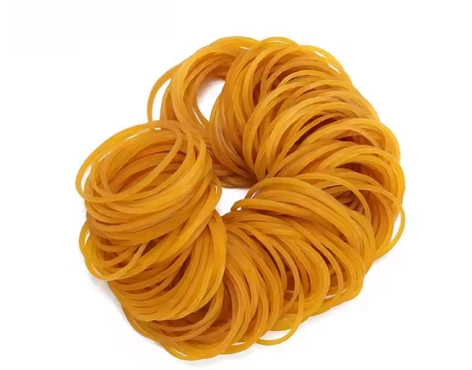
Why Storage Conditions Control Rubber Band Lifespan
Heat and Oxygen Accelerate Aging
Rubber ageing occurs through chemical and physical means. There is an increase in the rate of reaction as a result of heat and thermo-oxidative ageing of rubber, which happens due to exposure to oxygen, with the possibility of altering the chemical composition of rubber, reducing its strength and flexibility. Rubber cartons stored in proximity to the roof, boiler, radiator, steam pipes, hot outer wall, or sunny loading bays are going to age faster than the ones that are stored in a stable inner environment.
Light, Ozone, and Stress Add Damage
Direct exposure to sunlight and UV-rich light may induce surface deterioration. Ozone poses great risk to most types of rubber and is a potential cause of small cracks, especially if the band is already under tension. Electrical devices capable of producing ozone, combustion fumes, and organic vapors must not be near rubber stock. Bands, bags, and containers can acquire a permanent set even before use.
Recommended Warehouse Storage Conditions
Maintain a Stable, Moderate Temperature
A practical control range is approximately 15°C to 25°C, with finished rubber products kept below 25°C and away from direct heat. Storage below 15°C does not automatically destroy rubber bands, but chilled products may stiffen and become easier to distort during handling. Rapid movement between cold and warm zones should be avoided because condensation and inconsistent material behavior can result.
Temperature mapping is more reliable than a single wall-mounted sensor in high-bay facilities. Monitoring should cover upper rack levels, exterior walls, loading areas, and locations near heat-generating equipment.

Control Humidity and Prevent Condensation
General rubber storage guidance calls for relative humidity below 70%. A stricter internal action limit of approximately 65% can provide a conservative control point for warehouses holding mixed elastomer inventories.
The primary objective is preventing condensation on products, inner bags, cartons, and labels. High humidity can weaken packaging and increase blocking or contamination. Warehouse storage for natural rubber bands should therefore include humidity logging in seasonal problem areas rather than relying only on readings from the main aisle.
Block Sunlight, UV, and Ozone
Rubber bands should remain in closed cartons or opaque inner packaging until required for production, repacking, or distribution. Windows near stock locations should be screened, and intense ultraviolet-rich lamps should not shine directly on exposed products.
Ozone-generating equipment, high-voltage devices, welding activity, combustion exhaust, and organic vapors deserve specific attention during warehouse risk assessments. Separating rubber inventory from these sources reduces unnecessary exposure throughout the storage period.
Prevent Strain and Chemical Contact
Cartons should be stacked within their compression limits, with no leaning pallets or crushed lower layers. Bands should remain relaxed rather than stretched around hooks, sample fixtures, or warehouse tools during long storage.
Fuels, oils, greases, acids, disinfectants, cleaning fluids, solvents, and their vapors should be segregated. Original approved packaging should remain intact because unsuitable plasticized films, reactive metals, or contaminated wrapping materials may contribute to deterioration.
Procurement teams should confirm whether each lot belongs to the natural rubber band range or another elastomer category before assigning storage and inspection requirements.
Packaging and Inventory Practices That Preserve Performance
Use Sealed, Opaque, Compatible Packaging
Packaging should limit air, light, dust, oil, and moisture without deforming the bands. Sealed or well-wrapped packages and opaque outer materials provide stronger protection. Transparent inner bags may support identification, but they should remain inside closed cartons during warehouse storage.
Reopened bulk bags should be resealed promptly rather than left exposed on packing benches. Direct contact between rubber and unvalidated plasticized packaging should also be avoided.
Apply FIFO by Production Lot
First-in, first-out rotation is essential, but production date and manufacturer lot number are more useful than receipt date alone. Imported goods may spend weeks in transit, meaning receipt-based rotation can place older production behind newer stock.
Pallet labels should record material, dimensions, color, production lot, packing format, receipt date, and internal review date. This system supports controlled rubber band lifespan management and allows faster investigation when a downstream operation reports breakage, tackiness, or reduced elasticity.
Avoid Excess Inventory and Poor Pallet Placement
Order quantity should reflect actual consumption, supplier lead time, demand variability, and safety-stock requirements. A low unit price becomes expensive when several months of inventory age under unsuitable conditions.
Pallets should remain off concrete floors and away from doors, roof leaks, exterior walls, grit, and chemical traffic. Dedicated elastomer rack positions make environmental monitoring, inspection, and stock rotation easier.
Procurement Specifications for Longer-Lasting Stock
Define Material, Performance, and Packaging
A purchase specification should identify material type, dimensions, color, pull or elongation requirements, rebound performance, surface condition, packing weight, inner-bag format, carton strength, lot identification, and recommended storage conditions.
Formulation, manufacturing process, dimensions, and product thickness can affect aging behavior. Consequently, no universal shelf-life number should replace supplier-specific information, approved samples, and incoming validation.
Approve Samples and Retain References
Pre-production samples allow procurement and quality teams to confirm size, elasticity, appearance, and packaging before mass production. A retained approved sample creates a practical benchmark for repeat orders.
Incoming lots can then be compared for dimensional consistency, surface condition, rebound, and break behavior. Retention samples should carry the production lot, receipt date, inspection date, and applicable purchase specification.
Include Storage Support in Supplier Evaluation
Supplier qualification should cover production control, batch traceability, inspection methods, packaging compatibility, customization capability, and repeat-order consistency.
International logistics also matters because prolonged exposure to hot containers, uncovered docks, or humid transshipment areas can undermine warehouse controls before arrival. Packaging and shipping requirements should therefore be reviewed during sourcing rather than after the goods enter inventory.
Warehouse Monitoring and Inspection
Track Conditions and Set Action Limits
Temperature and humidity records should be reviewed, not merely collected. Internal action limits can trigger stock relocation, ventilation changes, dehumidification, packaging inspection, or testing of affected lots.
Sensors should be placed in known hot spots, low-airflow corners, and upper rack levels. Seasonal trend reviews can reveal risks before product complaints or packing-line interruptions rise.
Inspect for Early Warning Signs
Representative samples should be checked for permanent distortion, cuts, abrasion, surface cracks, hardening, softening, tackiness, discoloration, and reduced rebound. These conditions may indicate environmental exposure, packaging incompatibility, excessive storage time, or mechanical compression.
Suspect stock should be quarantined and compared with the purchase specification before release. Functional stretch or break testing is appropriate when inventory approaches an internal review date or when warehouse records show an environmental excursion.
FAQ
What temperature is best for rubber bands storage?
A stable range around 15°C to 25°C is practical for many finished rubber products, with stock kept below 25°C and separated from direct heat. Product-specific manufacturer instructions take priority when available.
Should rubber bands be refrigerated?
Routine refrigeration is generally unnecessary. Low temperatures can stiffen rubber products, while transfer into warmer air may create condensation. Stable indoor conditions are normally more suitable for commercial inventory.
What inventory method is best for bulk rubber bands?
FIFO should be based on the manufacturing date and production lot. Lot labels, retained samples, environmental records, and periodic inspections provide stronger control than receipt-date rotation alone.
Build a More Reliable Factory-Direct Supply Program
Align Product Specifications with Warehouse Requirements
Longer-lasting inventory starts with coordinated decisions across procurement, quality, logistics, and warehouse operations. Material, dimensions, packing format, lot labeling, transit protection, and storage guidance should be agreed before purchase orders are released. VIET-Y is a manufacturer and factory specializing in rubber products and rubber band production, with OEM/ODM capability and multiple material series for commercial applications; B2B buyers, importers, distributors, packaging suppliers, and industrial supply companies can contact VIET-Y to discuss samples, bulk specifications, custom packaging, batch identification, and long-term supply planning.

Latest News
-
Jun. 04, 2026TPU Elastics Safety & Compliance for B2B Food and Hygiene Packaging 2026VIET-Y offers high elastic food grade TPU rubber bands with FDA and EU compliance for food and hygiene packaging. Superior durability, abrasion resistance and safety. Contact us for samples and bulk custom solutions.
-
Jun. 04, 2026Customizable Rubber Bands: Key to B2B Organization and Efficiency in 2026VIET-Y specializes in high-elasticity natural rubber bands and customizable elastic bands for B2B logistics, offices, and supply chains. Durable, color-coded solutions with strong rebound deliver reliable performance and workflow efficiency. Contact us for a free quote.
-
May. 28, 2026Reliable Wholesale Rubber Band Suppliers: B2B Sourcing Guide 2026VIET-Y offers reliable wholesale rubber band solutions with strict quality control, OEM/ODM capability, timely delivery, and ISO certification. This B2B sourcing guide helps buyers select trusted suppliers for sustainable supply chains in 2026.


