

Vietnam Rubber Bands Supply Chain: Nearshoring Advantages for Buyers
Time : Jul 02, 2026 View : 115
In warehouses, supermarkets, offices, and light industrial sites, a rubber band is not just a small accessory. It is part of daily bundling, sorting, labeling, and shipment preparation. For importers, distributors, packaging suppliers, and office supply wholesalers, rubber band sourcing should not depend only on unit price. A lower-cost product may lose value if it breaks easily, smells strong, or arrives with inconsistent sizes.
This is why the Vietnam rubber bands supply chain has gained more attention among B2B buyers. Vietnam is an important natural rubber supply market, and natural rubber remains a key material for elastic products. For buyers sourcing wholesale rubber bands, the value of a stronger supply chain is not only lower cost. It is better material discussion, more stable product quality, clearer customization, and smoother repeat orders.
VIET-Y focuses on elastic rubber products across rubber, latex, TPU, and TPR series. Its product range includes natural rubber bands, flat latex rubber bands, colored elastic bands, TPU elastic products, and customized options for commercial use. This makes the brand relevant for buyers serving packaging, logistics, agriculture, office supply, supermarket, and accessory markets.
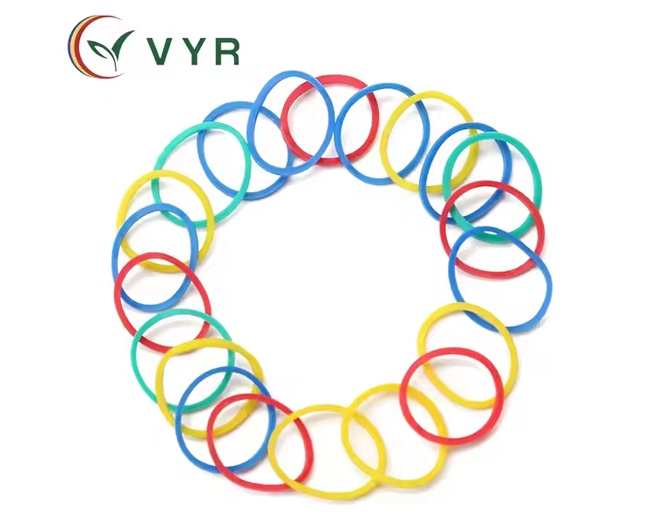
Why Vietnam Rubber Bands Matter for B2B Procurement
Rubber bands are used in repetitive daily work. Produce suppliers use them for vegetable bundling. Warehouses use them to group small parts. Office distributors need stable sizes for retail packs. Logistics teams may use colored rubber bands for quick sorting.
In these cases, buyers are not only purchasing a rubber ring. They are purchasing stable performance across repeated use.
Common Problems in Bulk Rubber Band Orders
Bulk rubber band procurement often faces similar issues:
-
Bands break during packing
-
Sizes vary within the same carton
-
Colors differ between repeat batches
-
Bands become sticky or brittle after storage
-
Retail packs have strong odor
-
Carton packing does not match sales channels
These problems usually come from weak material selection, poor size control, unstable cutting, or loose inspection. A reliable rubber band supplier should control both product performance and packing details.
What Nearshoring Means for Rubber Band Buyers
Nearshoring in rubber band procurement does not always mean moving production to the nearest country. It means building a shorter and more manageable supply chain around material access, production coordination, quality checks, and export service.
For natural rubber bands, this matters because raw material quality directly affects stretch, rebound, grip, and aging resistance. Clear communication on material type, product category, batch control, and packing method helps buyers compare suppliers with fewer risks.
Shorter Communication Supports Faster Decisions
Rubber band orders may look simple, but details matter. A buyer may need one size for office files, a wider flat latex band for industrial bundling, and colored rubber bands for supermarket sorting.
When sourcing, production, inspection, and export handling are well coordinated, sample approval becomes easier. Bulk production is also more likely to match the approved sample.
Better Material Visibility Reduces Sourcing Risk
Material visibility is becoming more important in B2B sourcing. Natural rubber products may be reviewed under supplier checks, especially when buyers sell into markets with stricter sustainability or documentation requirements.
This does not mean every rubber band order needs complex paperwork. Still, buyers increasingly prefer suppliers that can explain material type, batch consistency, and quality inspection clearly.
How Natural Rubber Affects Rubber Band Performance
Natural rubber bands remain widely used because they offer a practical balance of stretch, rebound, grip, and cost. For many packaging and sorting jobs, they are still one of the most efficient choices.
The key buying point is consistency. Bulk production should keep the same size range, stretch behavior, surface finish, and packing quality as the approved sample.
Elasticity, Rebound, and Grip
Elasticity decides how easily a band stretches around the product. Rebound shows whether it returns close to its original size. Grip affects whether bundled items stay in place.
| Buyer Scenario | Common Problem | Recommended Check |
| Office file grouping | Bands become loose | Size tolerance and rebound |
| Supermarket produce packing | Bands damage soft products | Soft grip and stretch control |
| Warehouse sorting | Bands break during handling | Tensile strength and aging resistance |
| Industrial bundling | Holding force is weak | Width, thickness, and stretch range |
| Retail pack sales | Odor or poor appearance | Surface finish and packing quality |
A band that is too weak may break. A band that is too tight may damage soft goods. A band with poor rebound may loosen after short use.
Size Tolerance in Wholesale Rubber Bands
For wholesale rubber bands, size tolerance is a key procurement point. Inner diameter, width, thickness, and stretch range should remain stable within the approved standard.
If one carton contains noticeably different sizes, workers may need to sort them by hand. That slows packing work and increases hidden labor cost.
VIET-Y Product Options for Different B2B Uses
VIET-Y offers rubber series, latex series, TPU series, and TPR series. This product structure gives buyers more choices when one order includes several elastic product types.
Rubber and Latex Series
Rubber and latex products are suitable for buyers looking for natural rubber bands, flat latex rubber bands, and general elastic rubber products. These products can be used in office supply channels, financial document grouping, supermarket packing, plastic bag bundling, collection use, and light industrial applications.
For distributors, stable stretch, clean appearance, and repeatable packing help reduce customer complaints, especially in private label or chain customer orders.
TPU and TPR Series
TPU and TPR elastic products serve buyers with color, accessory, or custom elastic needs. They are often used for colorful elastic loops, hair accessories, decorative bands, and special elastic items. For importers with mixed product lines, sourcing several elastic categories from one supplier can reduce communication work.

ESG and Compliance Considerations in Rubber Band Sourcing
ESG is no longer limited to large industrial products. Small consumables may also appear in supplier reviews, especially when they involve natural materials.
For rubber-related goods, buyers may pay closer attention to material origin, batch records, and supplier documentation. The EU Deforestation Regulation includes rubber within its commodity scope, so natural rubber-related sourcing should be handled carefully.
Key Questions for Supplier Review
Before placing bulk orders for natural rubber bands, buyers can check:
-
Material type and product category
-
Natural rubber, latex, TPU, or TPR classification
-
Sample quality and bulk production match
-
Size tolerance control
-
Batch record availability
-
Packing method and carton strength
-
OEM/ODM support
-
Export documents and shipment service
This checklist helps buyers compare suppliers more clearly and avoid decisions based only on price.
Procurement Value for Importers and Distributors
A rubber band supplier should support more than production. For importers and distributors, the real value lies in stable supply, practical customization, and reliable communication.
Stable Supply for Repeated Orders
Wholesale rubber bands are often reordered many times a year. Once the size, color, material, and packing format are confirmed, future orders should stay close to the approved standard.
Flexible Customization for Different Channels
Different sales channels need different rubber band formats. Some buyers need natural color bands in bulk cartons. Some need small retail packs. Others require colored bands for sorting or wider flat latex bands for stronger holding force.
VIET-Y supports customization in size, color, style, and packaging. This flexibility fits office supply, supermarket, packaging, logistics, and light industrial markets.
Export Service Support
VIET-Y’s service information covers foreign trade support, logistics transportation, supply chain management, customs clearance, and customer service. For overseas buyers, these services can reduce friction during order confirmation, shipment planning, and repeat procurement.
How to Choose the Right Rubber Band Supplier
Price remains important, but it should not be the only factor. A low quote can lose value quickly if the bands break, smell strong, vary in size, or arrive in unsuitable packaging.
A practical supplier review should include:
-
Product category fit
-
Raw material clarity
-
Stretch recovery
-
Tensile strength
-
Aging resistance
-
Size and color consistency
-
Sample approval process
-
Bulk production control
-
Carton packing strength
-
Private label support
-
Export experience
These points reflect how rubber bands are actually used after delivery. They also help buyers choose suppliers for long-term cooperation, not only one-time orders.
Conclusion
Vietnam rubber bands supply chain planning helps B2B buyers manage sourcing risk beyond price. Material stability, product consistency, customization, ESG awareness, and export service all affect the final buying decision.
For importers, distributors, and procurement teams, VIET-Y provides practical elastic product options for daily packing, sorting, bundling, and channel-specific supply needs. For bulk procurement, sample review, custom packaging, or repeat order planning, contact VIET-Y for product specifications and quotation support.
FAQ
Q1: Why are Vietnam rubber bands important for B2B procurement?
A: They support stable natural rubber sourcing, better material discussion, and smoother wholesale rubber bands planning.
Q2: What makes natural rubber bands suitable for packaging use?
A: Natural rubber bands offer good stretch, rebound, and grip for packing, sorting, and bundling.
Q3: How should buyers evaluate a rubber band supplier?
A: Check material type, size tolerance, tensile strength, packing quality, export experience, and sample consistency.
Q4: Can VIET-Y provide customized wholesale rubber bands?
A: VIET-Y supports custom size, color, style, and packaging across rubber, latex, TPU, and TPR series.
Q5: Why does ESG matter in natural rubber bands sourcing?
A: Buyers increasingly review material origin, batch control, and documentation for natural rubber-related products.

Latest News
-
Jun. 04, 2026TPU Elastics Safety & Compliance for B2B Food and Hygiene Packaging 2026VIET-Y offers high elastic food grade TPU rubber bands with FDA and EU compliance for food and hygiene packaging. Superior durability, abrasion resistance and safety. Contact us for samples and bulk custom solutions.
-
Jun. 04, 2026Customizable Rubber Bands: Key to B2B Organization and Efficiency in 2026VIET-Y specializes in high-elasticity natural rubber bands and customizable elastic bands for B2B logistics, offices, and supply chains. Durable, color-coded solutions with strong rebound deliver reliable performance and workflow efficiency. Contact us for a free quote.
-
May. 28, 2026Reliable Wholesale Rubber Band Suppliers: B2B Sourcing Guide 2026VIET-Y offers reliable wholesale rubber band solutions with strict quality control, OEM/ODM capability, timely delivery, and ISO certification. This B2B sourcing guide helps buyers select trusted suppliers for sustainable supply chains in 2026.


