

Bulk Rubber Band Storage Guide to Reduce Aging Loss in 2026
Time : Jun 25, 2026 View : 88
Bulk rubber bands look simple on a purchase sheet: size, color, weight, carton quantity, and packaging. In real warehouse work, they are not products that can sit anywhere for months without risk.
For B2B buyers, rubber band aging often appears as small trouble first. A band snaps during packing. A bundle feels sticky inside the carton. Colored rubber bands fade and lose sorting value. One case may not stop a packing line, but repeated issues increase labor cost, repacking work, waste, and urgent replenishment.
In 2026, bulk rubber bands still support daily work across packaging, logistics, office supply, and industrial handling. VIET-Y supplies bulk rubber band products for buyers who need stable elasticity, practical packaging, and custom options for different use scenarios. Proper rubber band storage is part of inventory control, not just warehouse housekeeping.
Why Rubber Band Aging Matters for B2B Buyers
Rubber band aging can happen before use. Heat, light, humidity, oxygen, ozone, poor sealing, and slow stock rotation can all affect rubber band shelf life.
For B2B buyers, the problem is scale. A distributor may store hundreds of cartons. A factory may use thousands of rubber bands every week. Once aging affects a batch, the loss is no longer small.
Hidden Costs Beyond Product Price
Rubber bands usually have a low unit price, so storage risk is easy to ignore. The real cost often appears in other areas:
-
More snapping during packaging or bundling
-
Extra labor for sorting sticky or cracked bands
-
Customer complaints about weak elasticity
-
Waste from forgotten stock
-
Emergency orders when old stock fails
These losses may not be recorded as rubber band cost. They often appear as labor cost, delay, complaint handling, or replacement cost.
Stable Elasticity Supports Daily Operations
Bulk rubber bands are used in fast, repeated tasks. Logistics teams use them for labels, documents, and small-item grouping. Offices use them for files and supplies. Factories use industrial rubber bands for temporary bundling before final packing.
Colored rubber bands also support visual sorting by size, batch, department, or urgency. When color fades or elasticity becomes uneven, sorting becomes less efficient.
What Causes Bulk Rubber Bands to Age in Storage?
Rubber band aging is closely linked to storage conditions. Products may leave the supplier in good condition, but poor warehouse handling can shorten their useful life.
Heat and Temperature Change
Heat is one of the biggest causes of elasticity loss. Bulk rubber bands stored near windows, heaters, hot walls, machine rooms, or loading doors may age faster than stock kept in a cool indoor area.
Many rubber storage references suggest a cool, stable indoor range, often near 5°C to 25°C, though the best condition still depends on material, packaging, and storage time. In normal warehouses, perfect temperature control is not always realistic. Stability matters more than chasing an exact number.
Summer shipping also needs attention. Pallets left near hot loading docks or inside containers for too long may face higher temperature exposure than expected.
Humidity, Light, and Air Exposure
Humidity affects both rubber bands and cartons. Damp floors can weaken packaging and create poor storage conditions. High humidity may also make some rubber bands feel tacky after long storage, especially after inner bags are opened.
Direct sunlight is another common risk. UV exposure can damage rubber surfaces and fade colored rubber bands. Closed cartons and opaque packaging help protect rubber band shelf life at low cost.
Air exposure should also be reduced. Rubber bands left loose in bins or open bags are more exposed to oxygen, dust, moisture, and light.
Ozone, Chemicals, and Strong Odors
Ozone is easy to overlook. Some motors, electrical equipment, generators, and high-voltage devices may create ozone. Long-term exposure may make rubber bands brittle or cracked.
Rubber bands should also be stored away from solvents, fuels, oils, acids, disinfectants, and strong-smelling materials. Odor transfer can affect customer experience, especially in office supply and retail channels.
How to Protect Rubber Band Shelf Life in Warehouses
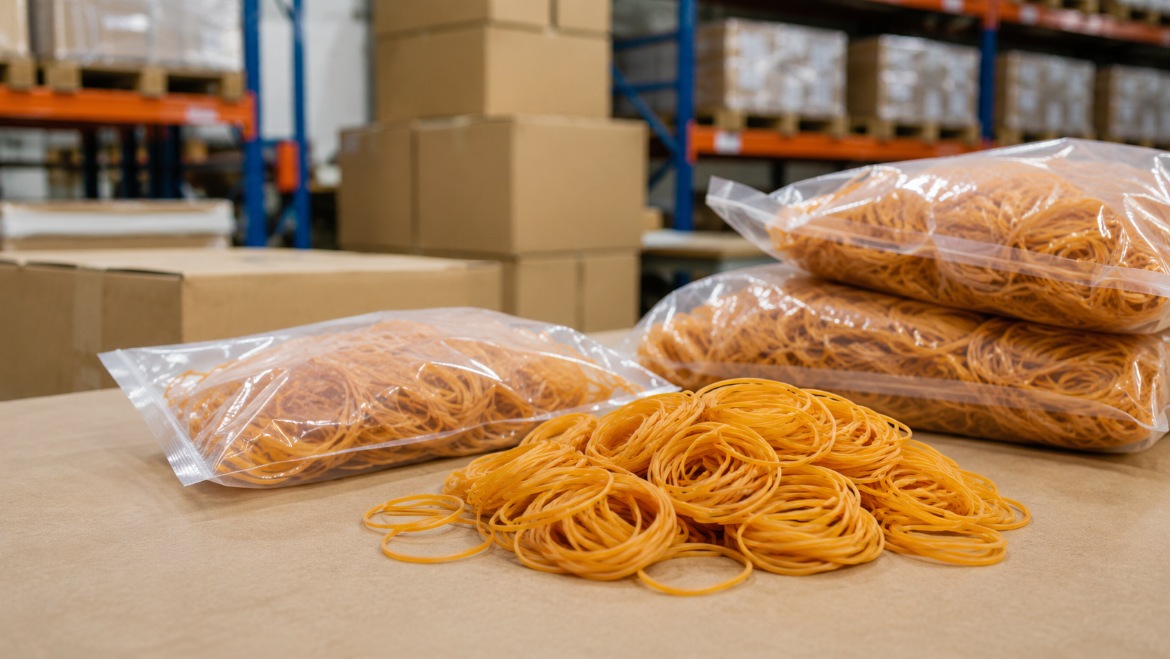
A good storage system does not need complicated equipment. Most improvement comes from better placement, sealed packaging, and clear rotation rules.
| Storage Factor | Better Practice | Common Mistake |
| Temperature | Cool indoor storage | Near heat or loading doors |
| Humidity | Dry shelves or pallets | Cartons on damp floors |
| Light | Closed cartons, opaque bags | Clear bags under strong light |
| Ozone | Away from motors and electrical rooms | Storage near equipment |
| Chemicals | Clean, low-odor storage area | Mixed with oils or solvents |
| Rotation | FIFO by arrival date | Old and new stock mixed |
Keep Rubber Bands Cool, Dry, and Dark
Bulk rubber bands should be stored indoors, away from sunlight, heat, and damp areas. Pallets or shelves are better than direct floor storage, especially in humid regions.
Closed cartons should remain closed until needed. For standard and colored rubber bands, dark storage helps reduce surface aging and color fading.
Avoid Compression and Deformation
Rubber bands should not be stored stretched, hung, twisted, or folded for long periods. Heavy pallets should not press directly on rubber band cartons.
Industrial rubber bands and larger-size bands need extra care because shape affects handling. Pressure marks may not destroy the product, but they can affect consistency.
Store by Type, Size, and Application
Standard, colored, industrial, and custom rubber bands may move at different speeds. Mixing all stock together makes rotation harder.
A better system separates stock by size, color, application, and arrival date. Fast-moving standard products can stay near the picking area. Slow-moving custom rubber bands should have stricter date control.
Why Original Packaging and FIFO Matter
Good storage is not only about the warehouse environment. Packaging control and inventory rotation also affect rubber band shelf life.
Keep Rubber Bands in Original Packaging
Original packaging helps prevent rubber bands from getting dusty, wet, exposed to light, and being handled unnecessarily. Original packaging will also help keep batch labels visible in order to ensure proper tracking and management of inventory.
Opening too many cartons at once may feel convenient, but it increases exposure and makes batch control messy.
Open Only What Is Needed
Inner bags should be opened based on actual use. If only part of a bag is used, the rest should be resealed. Loose rubber bands left on tables, shelves, or machines can pick up dust and age faster.
Use FIFO for Better Stock Rotation
FIFO means first in, first out. Older batches should leave the warehouse before newer batches. For bulk rubber bands, FIFO helps prevent forgotten cartons from aging while newer stock keeps moving.
Useful labels should show arrival date, batch number, size, color, storage area, and inspection date.
Before placing a new order, buyers should review current stock age and monthly usage. Overstocking may look safe, but slow-moving stock can become a shelf life problem.
B2B Storage Checklist for Bulk Rubber Bands
A short checklist can help procurement and warehouse teams follow the same standard:
-
Store cartons indoors, away from heat and sunlight
-
Keep products off damp floors
-
Keep bags sealed before use
-
Separate rubber bands from chemicals and ozone sources
-
Label cartons by arrival date and batch
-
Use FIFO and inspect older stock before bulk use
Inspection does not need to be complicated. Check elasticity, cracking, surface stickiness, odor, color change, and snapping rate. A quick pull test before bulk use can prevent larger packing problems.
Better rubber band storage also supports waste reduction. Fewer aged cartons mean less discarded rubber, fewer replacement shipments, and less pressure on warehouse disposal. It is not a big sustainability slogan, but it is a practical way to cut avoidable waste in daily operations.
How VIET-Y Supports Bulk Rubber Band Buyers
Supplier selection affects storage performance before products enter the warehouse. For bulk buyers, the right rubber band is not only about size and price. It also depends on material match, packaging format, quality checking, and delivery rhythm.
VIET-Y supplies bulk rubber bands for B2B use, including standard and custom options for packaging, logistics, office supply, sorting, and general industrial handling. For wholesale buyers, size, color, and packaging customization can help match rubber bands with real application needs, instead of keeping too much slow-moving stock in storage.
Having detailed product specs, secure packaging, and pre-shipment inspection might be of some use to customers to avoid complaints post-shipment. Proper inner packaging, boxes, and bulk packaging may also reduce unnecessary exposure at warehouses.
For distributors, factories, and export buyers, a better-matched order is less likely to sit in the warehouse for too long. This helps in reducing rubber band aging before usage and simplifying bulk rubber band ordering.
Conclusion
Bulk rubber band storage helps reduce waste, protect elasticity, and keep warehouse work moving smoothly in 2026. Most aging problems come from poor storage conditions, damaged packaging, and weak stock rotation. A cleaner system starts with sealed packaging, clear labels, and FIFO inventory control.
For businesses sourcing standard or custom rubber bands, VIET-Y provides bulk supply options for packaging, logistics, office supply, and industrial use. Suitable product selection, packaging support, and wholesale planning can help reduce rubber band aging before it becomes a costly warehouse problem. Contact VIET-Y for product specifications, custom options, and bulk rubber band supply support.
FAQ
Q1: What is the best way to store bulk rubber bands?
A: Store bulk rubber bands in a cool, dry, dark place, away from heat, sunlight, ozone, and chemicals.
Q2: Why do bulk rubber bands become brittle in storage?
A: Rubber band aging is usually caused by heat, UV light, ozone, oxygen, humidity changes, and long storage time.
Q3: Should rubber bands stay in original packaging?
A: Yes. Original packaging protects rubber bands from dust, moisture, light, air exposure, and unnecessary handling.
Q4: How does FIFO help rubber band shelf life?
A: FIFO moves older batches first, reducing forgotten stock, long-term aging, and warehouse waste.
Q5: What should B2B buyers check before using stored rubber bands?
A: Check elasticity, cracking, stickiness, odor, color fading, and snapping rate before bulk use.

Latest News
-
Jun. 04, 2026TPU Elastics Safety & Compliance for B2B Food and Hygiene Packaging 2026VIET-Y offers high elastic food grade TPU rubber bands with FDA and EU compliance for food and hygiene packaging. Superior durability, abrasion resistance and safety. Contact us for samples and bulk custom solutions.
-
Jun. 04, 2026Customizable Rubber Bands: Key to B2B Organization and Efficiency in 2026VIET-Y specializes in high-elasticity natural rubber bands and customizable elastic bands for B2B logistics, offices, and supply chains. Durable, color-coded solutions with strong rebound deliver reliable performance and workflow efficiency. Contact us for a free quote.
-
May. 28, 2026Reliable Wholesale Rubber Band Suppliers: B2B Sourcing Guide 2026VIET-Y offers reliable wholesale rubber band solutions with strict quality control, OEM/ODM capability, timely delivery, and ISO certification. This B2B sourcing guide helps buyers select trusted suppliers for sustainable supply chains in 2026.


