

The Ultimate Guide to Food-Grade Rubber Bands for Wholesale Buyers | VIET-Y
Time : Apr 02, 2026 View : 461
Introduction
Food-grade rubber bands take an essential position in the worldwide food supply system. They assist in grouping fresh vegetables such as asparagus and green onions. They support poultry wrapping and bakery containers too. This maintains operations smooth, sanitary, and complete while moving and storing items. In 2026, shipments between countries are growing. Regulations for compliance are shifting as well. These changes cover FDA attention to chemical protection and EU revisions to limits on migration in food contact. Consequently, the function of these bands in secure, trackable wrapping becomes far more crucial.
Wholesale purchasers face larger obstacles. They must confirm adherence to FDA 21 CFR 177.2600 for rubber items used repeatedly. They follow EU Regulation (EU) No 10/2011 for plastic FCMs too. This regulation frequently relates to elastomers. They manage price steadiness even with variations in supply. Plus, they search for trustworthy materials amid stricter checks for pollutants. Examples include tests for heavy metals and nitrosamines moving over. Interest in approved, FDA-compliant rubber bands rises steadily among B2B importers and sellers. This thorough guide includes everything wholesale purchasers require. It addresses standards for compliance and kinds of materials. It examines performance, choices for selection, and ways to assess suppliers. The guide explains why VIET-Y appears as a solid Chinese exporter offering top-quality, adjustable options.
Zhejiang VIET-Y Rubber Products Co., Ltd., established in 2010 at No. 13 Qingxi East Road, Qingkou Industrial Zone, Jiangdong Street, Yiwu City, specializes in premium rubber band series for global markets, leveraging Vietnam-sourced natural rubber and advanced production for consistent quality.
What Makes Rubber Bands Food‑Grade? Key Standards & Compliance
Food-grade rubber bands have to satisfy rigid rules on chemical protection and transfer limits. This makes sure no dangerous elements shift to food. The same applies in cases of indirect touch, which occurs often in grouping or wrapping tasks.
-
FDA 21 CFR 177.2600 governs rubber articles intended for repeated use in food contact, specifying permitted substances, extraction limits (e.g., ≤20 mg/in² in first 7 hours for aqueous foods), and requirements for thorough cleansing before initial use.
-
EU Regulation (EU) No 10/2011 sets migration limits for plastic FCMs (applicable to many synthetic elastomers like TPU), with recent 2025/2026 amendments updating the Union positive list, purity requirements, and transitional provisions until September 2026 for legacy materials.
-
Exporters to North America/Europe often align with USDA guidelines for broader compliance.
In 2026, extra emphasis goes to transfer testing. This involves tighter methods for pollutants such as nitrosamines, heavy metals, and shifts in smell or taste. Such elements are vital for vegetables, meat, and wet foods. In these situations, indirect touch takes place regularly.
Types of Food‑Grade Rubber Bands Available for Wholesale
Natural Latex Options
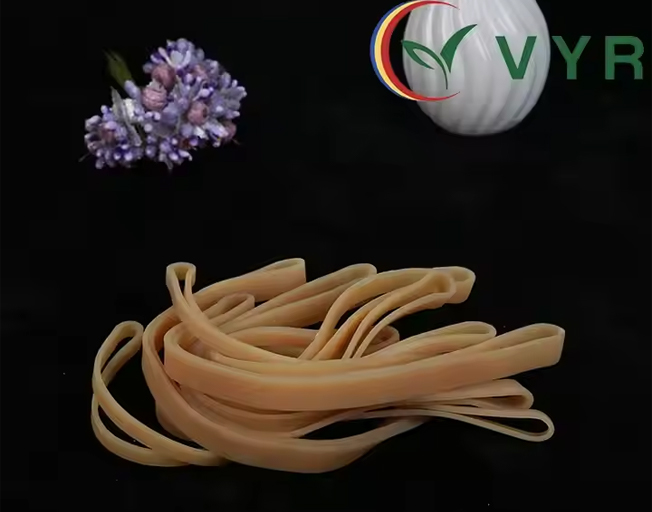
Natural latex works well with great flexibility, budget-friendly pricing, and rapid bounce back. It fits tasks like grouping vegetables such as celery or herbs. VIET-Y gets high-grade natural rubber from Vietnam. This results in safe, durable bands that resist aging. These natural latex options offer strong extension up to 7x length and dependable function.
TPU/Synthetic Elastics
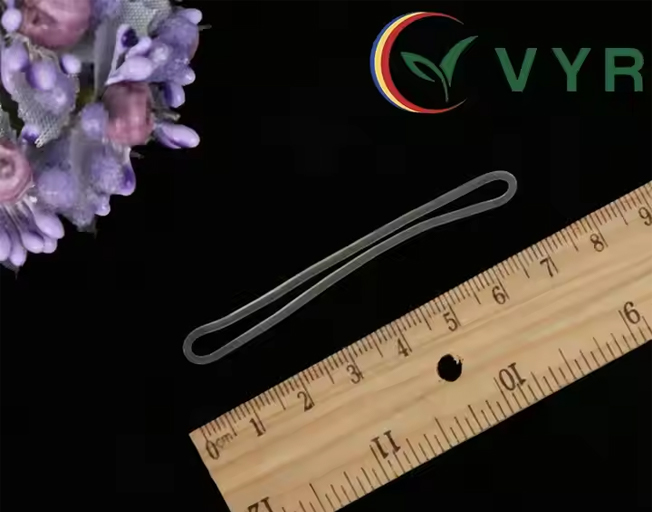
TPU gives a choice without latex. It causes few allergies and resists chemicals and oil effectively. It remains steady during shifts in heat and allows recycling. Purchasers select these TPU/Synthetic elastics for bakery products, frozen items, and tasks focused on eco-friendliness.
Blends & Specialty Bands
Tailored mixtures supply options with colors, prints, or extra strength. These aid in promoting brands, tracking items, and meeting needs for industrial meat or wrapping in chilled areas.
| Type | Material | Key Benefit | Typical Use |
| Natural Latex | High-quality natural rubber | Superior elasticity & cost-effective | Produce bundling |
| TPU/Synthetic | Thermoplastic polyurethane | Hypoallergenic, recyclable, durable | Bakery/frozen logistics |
| Blended/Specialty | Custom mixes | Branding, traceability, heavy-duty | Export & industrial packaging |
Essential Properties & Performance for Food Industry Applications
Food-grade rubber bands need to stress protection alongside flexibility.
-
Safety: Odorless, tasteless formulations minimize migration and flavor transfer risks in sensitive items like herbs or baked goods.
-
Durability: Retention of stretch and strength through refrigeration/freezer cycles (typically -20°C to +5°C for most applications).
-
Versatility: Adaptable for sealing nut bags, tray organization, produce bundling, and transit across food lines.
VIET-Y’s mission—“connecting the world with elastic strength”—drives ongoing R&D in safer, compliant materials for global food applications.
Benefits of Bulk Wholesale Purchasing in 2026
Sourcing straight from the VIET-Y factory delivers primary advantages for B2B in 2026.
-
Cost Control: Competitive per-unit pricing and stable supply via long-term contracts amid global volatility.
-
Customization: Wide size range (#31–#170+), colors, printing/logos for branding and traceability.
-
Supply Chain Reliability: Advanced lines, rigorous QC/inspection, and international compliance minimize risks vs. retail channels.
VIET-Y’s quality systems ensure consistent performance for high-volume wholesale orders.
How to Choose the Right Food‑Grade Rubber Bands for Your Business
Picking the proper kind requires reviewing both usage settings and supplier trustworthiness:
-
Assess Application Needs — Direct/indirect contact, temperature exposure, elasticity requirements.
-
Evaluate Supplier Credentials — CoC, migration test reports (FDA/EU-aligned), MOQ flexibility, export experience.
-
Why Choose VIET-Y — Diverse natural/TPU portfolio, rigorous QC per international standards, experienced export teams for on-time delivery, OEM/ODM support for tailored solutions. With proven export expertise, VIET-Y ensures reliable, compliant supply for global wholesalers.
We have many years of export experience to ensure orders are delivered to you on time. Combined with their OEM & ODM capabilities, this makes VIET‑Y an ideal partner for wholesalers seeking consistency across markets.
Common Mistakes Wholesale Buyers Should Avoid
Usual errors involve:
-
Overlooking evolving 2026 migration/contaminant testing (nitrosamines, heavy metals) leading to penalties.
-
Selecting uncertified suppliers, risking recalls from failed FDA/EU audits.
-
Prioritizing low price over quality, increasing costs from breakage, delays, or non-compliance.
VIET-Y prioritizes consistent quality over short-term price competition for reliable, long-term value.
Conclusion
Food-grade rubber bands could look like simple components within intricate supply networks. However, they defend cleanliness throughout vegetable farms, meat handling sites, bakeries, and shippers around the world. Through working with approved makers that supply fda compliance rubber bands, companies shield both buyers and their image. They enhance work efficiency as well.
VIET‑Y continues leading this transformation through commitment to quality first principles: We adhere to the business philosophy of “customer first, forge ahead”, adhere to the principle of “customer satisfaction”, provide high-quality services to our customers. For wholesale quotes, compliance guidance, or sample requests, contact VIET‑Y at vyr@cviet-y.com or visit No. 13 Qingxi East Road in Yiwu City — a hub connecting global elastic solutions.
FAQs
Q1: What FDA standards must food-grade rubber bands meet for wholesale use?
A: They must comply with FDA 21 CFR 177.2600 governing rubber articles intended for repeated use in contact with food. This includes limits on extractable compounds under various conditions such as water or oil immersion tests.
Q2: Are natural latex or TPU options better for food-grade applications in 2026?
A: Both have advantages — natural latex offers exceptional elasticity at lower cost; TPU provides allergen-free safety and recyclability suited for bakery or frozen goods sectors adapting to sustainability goals.
Q3: Can food-grade rubber bands be customized with printing for wholesale orders?
A: Yes. VIET‑Y supports OEM/ODM customization including sizes (#31–#170+), colors, logos, and printed identifiers that enhance branding visibility during export shipments.
Q4: How do I verify a supplier’s compliance for food contact materials?
A: Request Certificates of Compliance (CoC), third-party migration test reports aligned with EU 10/2011 standards, and review their export experience documentation before placing large orders.
Q5: What sizes and quantities are typical for bulk wholesale food-grade rubber bands?
A: Standard wholesale batches range from small-diameter #31 bands used in produce bundling up to #170 heavy-duty versions designed for industrial meat packaging — typically shipped by carton pallets directly from factory warehouses through sea freight logistics managed by VIET‑Y’s trade division.

Latest News
-
Jun. 04, 2026TPU Elastics Safety & Compliance for B2B Food and Hygiene Packaging 2026VIET-Y offers high elastic food grade TPU rubber bands with FDA and EU compliance for food and hygiene packaging. Superior durability, abrasion resistance and safety. Contact us for samples and bulk custom solutions.
-
Jun. 04, 2026Customizable Rubber Bands: Key to B2B Organization and Efficiency in 2026VIET-Y specializes in high-elasticity natural rubber bands and customizable elastic bands for B2B logistics, offices, and supply chains. Durable, color-coded solutions with strong rebound deliver reliable performance and workflow efficiency. Contact us for a free quote.
-
May. 28, 2026Reliable Wholesale Rubber Band Suppliers: B2B Sourcing Guide 2026VIET-Y offers reliable wholesale rubber band solutions with strict quality control, OEM/ODM capability, timely delivery, and ISO certification. This B2B sourcing guide helps buyers select trusted suppliers for sustainable supply chains in 2026.


