
TPR or TPU for Small Hair Ties? A Practical Comparison
Time : Mar 12, 2026 View : 126
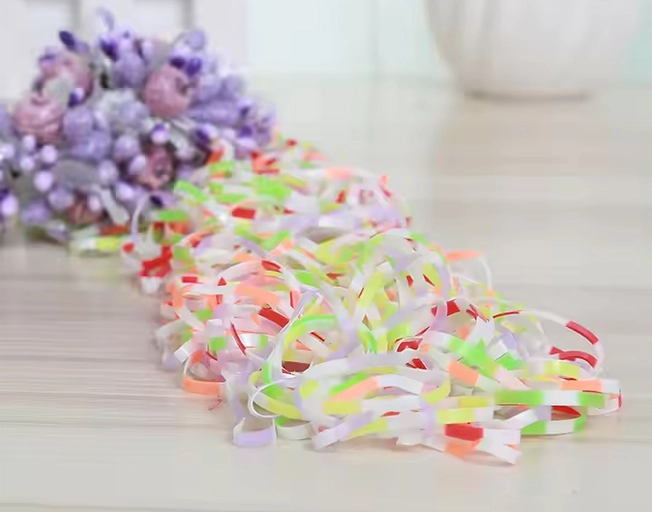
Small transparent hair ties are simple products, yet they create constant debate in sourcing and retail. Buyers search for clear hair elastics for braids, transparent hair ties for thick hair, or non slip small hair bands, but behind those searches lies a more technical question: should the material be TPR or TPU?
The answer affects clarity, stretch life, oil resistance, and even how easily the band slides off without pulling hair. This article compares TPR vs TPU hair ties from a performance and supply perspective, helping distributors, salon owners, and brand buyers make informed decisions.
Why Material Choice Matters in Small Hair Ties
Small hair ties are used in specific situations. They are not large scrunchies or fabric elastics. They are often:
Used for tight braiding
Used for sectioning hair in salons
Used as clear elastic hair bands for children
Used as invisible ponytail holders
Because they are small in diameter, they stretch to high ratios. That makes material fatigue resistance critical. Many consumers complain that cheap clear elastics snap after one use. That usually comes from poor formulation or inappropriate material selection.
Understanding TPR and TPU helps reduce return rates and improve repeat orders.
What Is TPR in Small Hair Bands?
TPR stands for thermoplastic rubber. It behaves like rubber but can be processed like plastic. In small hair ties, TPR is commonly used when softness and flexibility are priorities.
Between market feedback and product development practice, TPR small hair bands are known for:
Soft touch surface
Comfortable tension
Good initial stretch
Lower stiffness
TPR clear hair elastics are often chosen for children’s accessories or light daily styling because they feel gentle around the scalp.
However, under repeated heavy stretching, performance depends on formulation quality.
What Is TPU in Transparent Hair Ties?
TPU means thermoplastic polyurethane. It is widely used in products that require high tensile strength and abrasion resistance.
In small elastic hair bands, TPU is often selected for durability. It typically offers:
•Higher tensile strength
•Stronger rebound
•Better resistance to deformation
More stable structure under repeated use
When salons purchase bulk clear hair elastics for braiding, durability often matters more than softness. In such cases, TPU transparent hair ties tend to maintain shape longer.
Clarity and Visual Appearance
Many buyers focus on appearance first. Search terms like invisible hair ties for braids or clear ponytail holders show that transparency affects purchasing decisions.
Clarity comparison is summarized below.
| Material | Transparency | Gloss | Long-Term Clarity Stability |
| TPR | High transparency, slightly soft visual tone | Moderate gloss | May haze slightly under heat |
| TPU | Very high transparency | Higher gloss finish | More stable under humidity and light |
In retail packaging, a glass-like finish often signals premium quality. TPU usually holds its clarity longer if exposed to moderate sunlight or heat during transport.
For online sellers, product photography benefits from consistent transparency.
Elastic Recovery and Stretch Ratio
Consumers frequently search for clear elastic hair bands that don’t break. The main concern is stretch life.
High quality small hair ties may stretch up to six or seven times their inner diameter without snapping, depending on thickness and formulation. According to product data , strong elasticity and anti aging properties are core performance targets in rubber band manufacturing.
Performance comparison:
| Property | TPR | TPU |
| Initial stretch | High | High |
| Rebound strength | Medium to high | High |
| Fatigue resistance | Moderate | Strong |
| Permanent deformation risk | Medium | Lower |
In repeated braiding sessions, especially when stretched tightly around thick hair, TPU small hair ties usually show better rebound and less permanent elongation.
For light, occasional use, TPR may perform sufficiently while providing a softer feel.
Oil and Sweat Resistance
Hair produces natural oil. During summer or gym activity, sweat increases moisture exposure. Users searching for small hair ties for sports rarely mention material directly, but oil resistance plays a hidden role.
TPR performs well under normal indoor conditions. However, long exposure to sebum and heat can gradually reduce surface smoothness.
TPU typically resists oil absorption better. In practice, this means:
Less surface softening
Less stickiness
More stable tension after multiple uses
For sports brands, gym use, or humid climates, TPU clear hair elastics often maintain structure longer.
Removal Experience: Does It Pull Hair?
Another common search query is clear hair ties that don’t pull hair. The friction between band surface and hair strand determines removal comfort.
Small hair ties are usually wrapped two to three times around a ponytail. When removing, excessive friction can cause breakage.
TPR often feels softer and may slide off more easily on fine hair. TPU, when polished properly, also reduces snagging.
Removal comfort depends on:
Surface finish quality
Edge smoothness
Elastic memory
Hair texture
In professional braiding, stylists sometimes cut small elastics to avoid disturbance, regardless of material. For daily ponytails, both TPR and TPU can provide smooth removal if production control is strict.
Practical Use Scenarios
Choosing between TPR and TPU small hair ties should match end-user needs.
Children’s hair accessories often prioritize comfort and gentle tension. TPR small hair bands can meet this expectation.
Salons performing tight braids, cornrows, or sectioning thick hair usually need stronger rebound and better fatigue resistance. TPU clear elastic hair bands are often preferred in those settings.
Retail distributors serving both segments may consider offering both material options to cover different user groups.
Manufacturing Quality and Storage Matter
Material alone does not determine performance. Manufacturing standards influence consistency.
According to internal quality guidelines, improving product descriptions, expanding technical specifications, and presenting clear application scenarios strengthen customer trust and SEO performance.
Storage conditions also affect elastic life. Rubber-based elastic products should be stored in cool, moderate humidity environments and kept away from direct UV exposure. Improper storage can accelerate aging and reduce elasticity.
For distributors holding large inventory of bulk small hair elastics, warehouse conditions directly impact product lifespan.
About Zhejiang VIET-Y Rubber Products Co., Ltd.
Zhejiang VIET-Y Rubber Products Co., Ltd., established in 2010 in Yiwu, is a professional manufacturer specializing in rubber band products. The company supplies multiple product categories including RUBBER SERIES, TPU SERIES, TPR SERIES, and LATEX SERIES.
With structured production management and strict quality inspection processes, the company provides OEM and ODM services for global distributors and brands. Export experience across multiple regions supports stable delivery timelines and consistent product quality.
Advanced production lines and systematic testing procedures contribute to elastic strength, wear resistance, and durability in small hair ties and industrial rubber bands.
Conclusion
When selecting small hair ties, the choice between TPR and TPU depends on usage conditions rather than marketing labels.
TPR offers softness and comfortable tension, suitable for light styling and children’s accessories. TPU provides stronger rebound, better oil resistance, and longer fatigue life, making it suitable for thick hair, braiding, and repeated salon use.
Clarity, stretch recovery, oil resistance, and removal comfort should be evaluated together. For distributors and brand owners, understanding these differences helps reduce customer complaints and increase repeat purchasing.
Material choice combined with strict quality control leads to reliable transparent hair ties that meet real user expectations.
FAQs
What is the main difference between TPR and TPU small hair ties?
TPR small hair ties focus on softness and comfort, while TPU small hair ties provide stronger rebound and better resistance to deformation during repeated stretching.
Are TPU clear hair elastics better for braiding?
For tight braiding or thick hair, TPU clear hair elastics usually offer higher tensile strength and improved fatigue resistance.
Do TPR small hair bands break easily?
High quality TPR small hair bands do not break easily, but under heavy repeated stretching TPU may last longer.
Which material is better for transparent hair ties in humid climates?
TPU transparent hair ties generally perform better in humid or high sweat conditions due to stronger oil and moisture resistance.
Can small clear hair elastics be customized for wholesale?
Yes, manufacturers offering TPU and TPR small hair ties typically support OEM and ODM services for bulk orders, including customized size and packaging.

Latest News
-
Feb. 26, 2026WHY RUBBER BANDS ARE SO IMPORTANT NOWDiscover why rubber bands are essential for office organization, productivity, and cost-effective administrative solutions.
-
Feb. 19, 2026The Safety and Compliance of TPU Elastics in Food Contact and Hygiene ApplicationsDiscover the safety and compliance of TPU elastics for food packaging and hygiene applications, ensuring durability and reliability.
-
Feb. 12, 2026Can TPU Rubber Bands Be Used in Medical or Health-Related ProductsTPU bands, medical products, compression garments, prosthetics, healthcare applications


