

The Eco-Friendly Future of TPR Rubber Bands in Sustainable Business
Time : Nov 28, 2025 View : 138
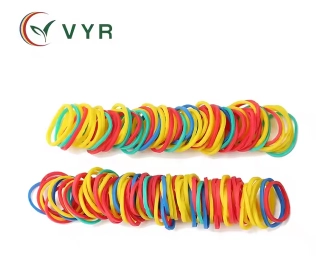
More companies than ever are looking for simple, practical ways to cut waste and shrink their environmental impact. One small changes often make the biggest difference — and that’s exactly where TPR rubber bands come in. Made from thermoplastic rubber, these colorful, durable bands give businesses a real alternative to traditional latex or natural rubber without sacrificing strength or performance. The shift toward TPR isn’t just a trend; it’s becoming a cornerstone of sustainable business.
Why Businesses Are Turning Green — and Why It’s Not Going Away
Customers notice when a company walks the talk on sustainability. A 2024 Nielsen study found 78 % of global consumers would change their buying habits to reduce environmental harm. That number keeps climbing. At the same time, governments are tightening rules on single-use plastics and carbon emissions. Staying ahead means finding materials that are kinder to the planet but still get the job done.
Traditional rubber bands come from natural latex — trees that need large plantations, plenty of water. The harvesting and processing leave a heavy footprint. TPR rubber bands take a completely different path. They’re synthetic but designed to be recyclable, reusable, and far less demanding on resources.
What Exactly Are TPR Rubber Bands?
TPR stands for thermoplastic rubber. Think of it as a hybrid: it has the stretch and snap of classic rubber bands, yet it melts and reshapes when heated, just like plastic. That single property opens the door to recycling programs that natural rubber can’t join.
Key advantages at a glance
| Feature | Traditional Natural Rubber | TPR Rubber Bands |
|---|---|---|
| Source | Tree sap (renewable but land-intensive) | Petrochemical but recyclable |
| Recyclability | Very limited | Fully recyclable |
| Allergens | Contains latex proteins | Latex-free, hypoallergenic |
| Lifespan in use | Good | Excellent, UV-resistant |
| End-of-life options | Landfill or incineration | Mechanical or chemical recycling |
| Production energy use | High | Lower |
Because TPR is molded instead of vulcanized (the irreversible curing process used for natural rubber), factories use less energy and produce fewer emissions.
Real Environmental Wins with TPR
The environmental advantages of TPR are clear and measurable, hinging on its recyclability, durability, and inclusivity.
1. Closing the recycling loop
After use, TPR bands can be ground up and remolded into new bands or other products. Some forward-thinking companies already collect used bands from offices and turn them back into fresh stock — a true circular model.
2. No latex allergies
Offices, schools, and hair-salons love this. Employees and customers with latex sensitivity can handle TPR bands worry-free.
3. Longer life, less waste
TPR resists cracking from sunlight and ozone much better than natural rubber. One band lasts longer, which means fewer replacements and less overall consumption.
4. Smaller shipping footprint
Lighter and more compact packaging is possible because TPR bands don’t stick together in heat the way natural rubber sometimes does. That translates to fewer trucks on the road.
How Everyday Businesses Are Already Using TPR Rubber Bands

Hair accessory brands have quietly switched to TPR for children’s colorful hair ties. The bands hold ponytails all day, survive hundreds of pulls, and parents appreciate the latex-free label.
E-commerce warehouses bundle packages with bright TPR bands instead of plastic tape. The bands are reusable by the recipient, turning packaging into something useful rather than trash.
Office supply buyers for large corporations now specify TPR in their tenders. One European bank chain replaced 1.2 million natural rubber bands per year with TPR — cutting their rubber-related carbon emissions by roughly 40 % while improving employee comfort.
Even farms and produce markets are testing wider TPR bands for bundling vegetables. The bands withstand cold storage and moisture without breaking down quickly.
Building a Greener Brand Image — Without Greenwashing
Switching to TPR rubber bands is an easy story to tell. It’s visible, tangible, and verifiable. Post a short video on social media showing the bands being recycled. Add a small “Made with Recyclable TPR” logo on packaging. Customers remember those details.
The cost difference today is minimal — often just a few cents per thousand bands — yet the branding value is huge. Companies that adopt TPR early position themselves as thoughtful and forward-looking, exactly the reputation modern buyers reward.
The Bigger Picture: Where TPR Is Heading
Researchers are already blending TPR with bio-based fillers to lower the petroleum content even further. New closed-loop systems let manufacturers take back used bands, clean them, and remake them on-site. In the next five to ten years, we’ll likely see TPR bands with 50–70 % bio content that still keep all the performance customers expect.
Regulations will help too. The EU’s Packaging and Packaging Waste Regulation is pushing hard on recyclability, and TPR fits perfectly. Companies that move now will be ready when requirements become mandatory.
Meet a Trusted Supplier in the Rubber Band Space
Zhejiang VIET-Y Rubber Products Co., Ltd. has been making high-quality rubber bands since 2010. Based in Yiwu, China — the world’s small-commodity capital — the company produces full ranges: classic natural rubber series, clear and colorful TPU series, versatile TPR series, and strong latex series. With advanced production lines, strict quality control, and years of export experience, they serve customers across continents who need reliable, responsibly made elastic products. Their TPR line, in particular, has become a favorite for businesses chasing genuine sustainability without compromise.
Conclusion
The eco-friendly future isn’t coming — it’s already here, and TPR rubber bands are one of the simplest ways to be part of it. They deliver the same hold and stretch people expect, yet they recycle easily, last longer, and leave a much lighter mark on the planet. For companies ready to make their operations a little greener and their brand a lot stronger, switching to TPR is an obvious, effective step.
Frequently Asked Questions
Q: Are TPR rubber bands really better for the environment than natural rubber?
A: Yes. Although both start from different raw materials, TPR’s full recyclability and lower production energy give it a clear edge in most lifecycle analyses.
Q: Do TPR rubber bands perform as well as the ones I use now?
A: Most users find them equal or better. They stretch just as far, snap back quickly, and resist sunlight and temperature swings longer.
Q: Will customers notice the switch to TPR rubber bands in my packaging?
A: Many do — especially when you point it out. A simple “Recyclable TPR band — please reuse or recycle” note turns ordinary packaging into a mini sustainability statement.
Q: Is there any smell with TPR rubber bands?
A: Almost none. Unlike fresh natural rubber, TPR has very little odor right out of the bag.
Q: How can my business start using TPR rubber bands for sustainable practices?
A: Reach out to established suppliers (many offer mixed trial boxes), test a small batch, then roll them out across your operation. The transition is usually seamless and the payback — in reputation and real environmental impact — starts immediately.

Latest News
-
Feb. 26, 2026WHY RUBBER BANDS ARE SO IMPORTANT NOWDiscover why rubber bands are essential for office organization, productivity, and cost-effective administrative solutions.
-
Feb. 19, 2026The Safety and Compliance of TPU Elastics in Food Contact and Hygiene ApplicationsDiscover the safety and compliance of TPU elastics for food packaging and hygiene applications, ensuring durability and reliability.
-
Feb. 12, 2026Can TPU Rubber Bands Be Used in Medical or Health-Related ProductsTPU bands, medical products, compression garments, prosthetics, healthcare applications


