

Navigating EUDR Compliance Sustainable Natural Latex Rubber Bands in the EU Market
Time : Jan 29, 2026 View : 80
Sustainable natural latex rubber bands hold firm as a go-to option for operators moving goods into the EU, now that the EU Deforestation Regulation (EUDR) application date stands confirmed at December 30, 2026 for large and medium operators, with micro and small ones receiving until June 30, 2027. The regulation enforces a strict cutoff—no deforestation or forest degradation linked to production after December 31, 2020—and natural rubber draws particular scrutiny from the cumulative expansion of plantations in core growing regions over prior decades. Bands relying on high-elasticity natural latex maintain consistent demand in office environments for reliable document stacking, in financial handling for secure note strapping, and in industrial packaging where stable load restraint proves essential. The intensified focus falls on establishing unbroken upstream verification to prevent container holds at port, fines tied to turnover levels, or exclusion from the market entirely.
Recent formal adoption of targeted revisions in late 2025 finalized the 12-month postponement across the board, responding to persistent implementation hurdles and the need for smoother system readiness. Global natural rubber production projections for 2025 sit around 14.89 million tons with only marginal year-on-year growth, while demand edges higher at roughly 1-2 percent annually, sustaining a structural tightness that carries into 2026. Procurement teams pursuing EUDR compliant rubber bands or traceable natural latex rubber bands continue confronting the familiar constraint: extended supply tiers where smallholder collections merge into processing without seamless origin records.
Understanding the EU Deforestation Regulation and Its Reach into Rubber Products
The EUDR mandates demonstrable proof that covered products carry no deforestation connection post-2020, anchored by plantation-specific geolocation polygons, thorough due diligence statements, and TRACES platform filing. HS code 4001 captures raw natural latex and primary forms, with downstream elastic bands manufactured primarily from natural latex classified under multiple “ex” codes across chapters 4005 through 4017.
Downstream handlers and brand owners periodically misjudge applicability, presuming synthetic admixtures or further conversion steps confer automatic exclusion. Trade practice indicates otherwise: bands where natural latex predominates in composition trigger obligations, especially when highlighted for recovery characteristics or biodegradability. Vulnerability remains concentrated in established supply origins in Thailand, Indonesia, and Vietnam, areas where rubber cultivation previously overlapped forested land, though strengthened industry coordination has reduced unauthorized expansion in more recent planting seasons.
Phased rollout ties directly to operator scale. Large and medium entities face the December 30, 2026 application date, while micro and small undertakings gain the extended period into June 30, 2027. Turnover-linked penalties alongside customs intervention underscore the value of advance supplier mapping as routine procedure within the sector.
Natural Latex Rubber Bands vs. Alternatives: A Clear Comparison of Environmental and Performance Factors
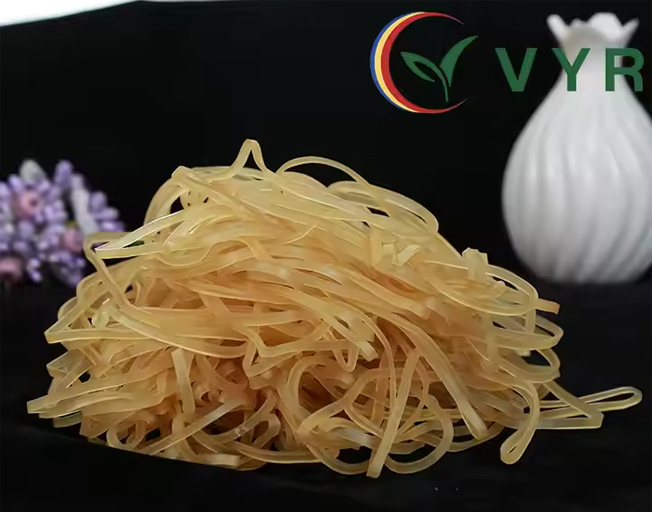
Natural latex rubber bands stem from latex collected via sustainable tapping of Hevea brasiliensis trees, preserving tree viability over 25–30 year cycles under proper stewardship. Formulations routinely achieve 500–700 percent elongation, ensuring dependable clamping in repeated file bundling or pallet stabilization without premature fatigue.
Synthetic alternatives, petroleum-sourced, demonstrate superior resistance to select weathering factors in extended outdoor conditions but lag in rebound elasticity and show virtually no breakdown in end-of-life scenarios. Lifecycle comparisons position responsibly sourced natural latex at 20–40 percent reduced carbon emissions per kilogram. Natural degradation proceeds over 10–20 years in typical soil environments, in stark contrast to the near-permanent persistence of synthetics.
Operational feedback sharpens the picture. Logistics teams unitizing export loads and component manufacturers bundling precision parts record substantially fewer breakage events with high-elasticity natural latex bands, which translates to lower replacement rates and minimized handling costs. Bulk procurement economics position traceable natural variants with a measured premium that compliance specialists regard as protection against regulatory exposure.
EUDR considerations heighten the contrast: only authenticated natural latex origins remove compliance ambiguity, steering selections toward suppliers providing verifiable plantation data over vague environmental assertions.
Practical Steps to Verify EUDR Compliance When Sourcing Natural Latex Rubber Bands
Compliance checks commence with extraction of geolocation polygons from raw-material providers, succeeded by satellite-based confirmation of land status beyond 2020. Due diligence statements must specify risk identification, applied mitigation, and at least five-year preservation of evidentiary documentation.
Complex multi-stage chains introduce ongoing difficulty—smallholder material frequently transits aggregators that interrupt traceability. Practical responses center on engaging partners possessing audited traceability frameworks or certifications that parallel EUDR criteria.
Physical evaluation stays critical. Suitable bands exhibit consistent sectional uniformity, defect-free surfaces, subdued odor, and adequate ozone-cracking resistance in accelerated protocols. Cost-driven alternatives periodically reflect reductions in latex purity or intentional traceability omission, elevating border rejection likelihood.
Durable supplier collaborations produce the most dependable results. Regular co-developed risk assessments, recurring joint reviews, and incremental process alignment forge chains equipped to endure inspection with limited disruption. Firms embedding these protocols well in advance of 2026 establish tangible precedence over those addressing deficiencies after the fact.
Zhejiang VIET-Y Rubber Products Co., Ltd.: A Dedicated Manufacturer of Natural Latex Rubber Bands
Zhejiang VIET-Y Rubber Products Co., Ltd. operates as a dedicated manufacturer since establishment in 2010 in Yiwu City’s Qingkou Industrial Zone, a longstanding focal point for commodity-scale output. Activity concentrates on rubber band and rubber ring lines, principally high-elasticity natural latex bands configured for office stationery, financial strapping, industrial bundling, and packaging purposes.
Current-generation equipment integrated with rigorous quality disciplines upholds conformity to international norms. Attention centers on production-run uniformity, wide-ranging specifications including colored and mixed elastic types, and capable OEM/ODM accommodation for tailored volume or format demands.
Environmental accountability permeates operations, evidenced by persistent initiatives to direct the rubber band field toward lower-impact practices and elevated process sophistication. Export reach extends across five continents, underpinned by predictable timelines and relationship-driven service. The configuration allows VIET-Y to provide sustainable natural latex rubber bands attuned to present regulatory realities and functional expectations.
Conclusion
The EUDR structure has recast access requirements for natural latex rubber bands within the European market, transforming verified compliance into an indispensable condition for continued participation. Organizations allocating effort to traceable, dependable materials evade enforcement consequences while conforming to intensifying calls for accountable supply chains. Deliberate partnerships with manufacturers versed in documentation handling and quality consistency yield enduring positioning in a setting progressively defined by sustainability mandates and operational steadiness.
Frequently Asked Questions
What makes natural latex rubber bands EUDR compliant?
Natural latex rubber bands meet EUDR compliance when geolocation polygons establish plantations free from deforestation after December 31, 2020, reinforced by exhaustive due diligence statements and methodical risk evaluations.
How do I check if my rubber band supplier meets EU Deforestation Regulation requirements?
Secure polygon coordinates, comprehensive due diligence materials, and continuous traceability documentation from the supplier, subsequently validating through satellite review or qualified external audits to discount post-2020 deforestation involvement.
Are all natural rubber bands automatically deforestation-free under EUDR?
No. Compliance rests on substantiated evidence of sourcing from non-deforested zones since 2020, irrespective of natural latex usage.
What happens if rubber band imports fail EUDR compliance in 2026?
Non-conforming shipments confront customs detention, turnover-based fines, or total EU market preclusion, generating supply interruptions and extended reputational effects.
Why choose high-elasticity natural latex rubber bands for sustainable packaging?
High-elasticity natural latex rubber bands unite exceptional stretch recovery and durability with biodegradability, exceeding synthetics across numerous applications while supporting deforestation-free sourcing consistent with EUDR stipulations.

Latest News
-
Feb. 26, 2026WHY RUBBER BANDS ARE SO IMPORTANT NOWDiscover why rubber bands are essential for office organization, productivity, and cost-effective administrative solutions.
-
Feb. 19, 2026The Safety and Compliance of TPU Elastics in Food Contact and Hygiene ApplicationsDiscover the safety and compliance of TPU elastics for food packaging and hygiene applications, ensuring durability and reliability.
-
Feb. 12, 2026Can TPU Rubber Bands Be Used in Medical or Health-Related ProductsTPU bands, medical products, compression garments, prosthetics, healthcare applications


