

How Temperature Shapes Rubber Band Strength
Time : Oct 30, 2025 View : 223
How Temperature Shapes Rubber Band Strength

Rubber bands seem simple. You grab one from a drawer, stretch it around a stack of papers or a bunch of veggies, and it holds tight. But what happens when the weather turns scorching or the garage dips below freezing? The effects of temperature on rubber band performance can sneak up on you, turning that trusty loop into a limp noodle or a brittle snap. If you’ve ever had a rubber band give out mid-task—maybe during a hot summer packing session or a cold winter bundle— you’re not alone. These everyday tools rely on their bounce, and heat or chill can throw that off balance.
Think about it. In an office, a rubber band keeps files neat. At home, it secures kids’ crafts or grocery bags. For small businesses, they bundle shipments without fuss. Yet temperature swings hit them hard, changing how far they stretch, how long they last, and even their shape. This post dives into those shifts. We’ll break down the science in plain terms, share real-life examples, and offer tips to keep your rubber bands reliable. By the end, you’ll see why storing them right matters—and how it saves headaches down the line. Let’s stretch into it.
What Makes Rubber Bands Tick?
Rubber bands start with natural rubber from trees, mixed with other stuff to boost strength. At heart, they’re long chains of molecules tangled like a ball of yarn. When you pull one, those chains straighten out, storing energy. Let go, and they snap back, thanks to the pull between links.
This magic works best at everyday temps. Around 68°F (20°C), a rubber band hits its stride—stretchy, tough, and quick to rebound. But push the dial up or down, and the chains act up. Heat makes them wiggle loose; cold locks them tight. It’s not just theory. In labs, tests show rubber bands lose 20-30% of their pull after a few hours in 100°F (38°C) air. Drop to 32°F (0°C), and they might gain snap but risk cracking under strain.
For users like you—whether bundling tools in a workshop or organizing mail—these basics matter. A weak band means redoing work. A tough one saves time. Understanding the pull behind the pull helps you pick and care for them smarter. Next, we’ll zoom in on heat’s side of the story.
When Things Heat Up: High Temperatures and Rubber Bands
Summer hits, and suddenly your rubber bands feel off. They sag instead of snap. That’s no fluke. High temps mess with rubber’s core, softening it and cutting its grip. Let’s unpack why—and what it means for your daily grind.
Why Heat Softens the Stretch
At the molecular level, warmth ramps up vibrations in those chain links. Picture the yarn ball heating up; strands loosen and slide apart. Rubber shrinks a bit, but more importantly, it gets gummy. Elasticity drops as the chains can’t coil back tight. Studies point to a 10-15% loss in rebound force per 18°F (10°C) rise above room temp.
This isn’t instant. Short blasts, like a sunny car dash, might just weaken it for the day. But repeated heat? It builds up, aging the rubber faster. Oils inside migrate out, leaving it dry and prone to tears. For a band tying produce at a market, that means slipping loads and wasted time.
Real-World Heat Headaches
Ever left bands in a hot toolbox? They turn brittle over weeks, cracking on first pull. In shipping, packages baked in trucks arrive with loose seals—items shift, delays follow. One farmer shared how 90°F (32°C) fields made his bundling bands fail mid-harvest, scattering carrots everywhere.
Heat also speeds chemical breakdown. UV from sun adds insult, but even indoor warmth counts. A desk drawer by a window? Culprit for faded stretch. The fix starts with awareness. Spot the signs—soft feel, slow snap—and swap them out. But prevention beats cure every time.
To sum the toll, here’s a quick table on heat’s hit:
|
Temperature Range |
Key Effect on Rubber Band |
Performance Impact |
|
68°F – 86°F (20°C – 30°C) |
Mild loosening |
Slight stretch loss; still usable for light tasks |
|
86°F – 104°F (30°C – 40°C) |
Noticeable softening |
20% elasticity drop; risks slipping on bundles |
|
Over 104°F (40°C+) |
Major degradation |
Bands deform; unsafe for heavy loads, short lifespan |
These shifts don’t just annoy. They cost—replaced stock, lost efficiency. For pros handling bulk, it’s a budget bite. Home users feel it in frustration. Either way, heat demands respect.
Chilling Out: Low Temperatures’ Surprising Boost
Flip the script to winter. Rubber bands don’t just survive cold; they often perk up. But extremes bring risks. Low temps tighten those molecular chains, boosting snap but testing limits. If you’re stacking firewood outside or sorting holiday gifts in a drafty garage, this matters.
The Cold Snap Effect
Chill slows vibrations, packing chains closer. The yarn ball firms up, ready to uncoil with extra force. Elasticity climbs—bands stretch farther and rebound harder. Tests show up to 25% more pull at 41°F (5°C) versus room temp. Durability ticks up too; rigid links resist wear better.
Short cold spells help. A fridge-stored band for crafts? Snappier hold. But it’s a double-edge. Too rigid, and it shatters on sharp bends. Natural rubber hates deep freezes, turning glassy below 14°F (-10°C).
Winter Woes to Watch For
Picture gloves off in January, fumbling frozen bands that crack like glass. One mechanic noted engine bay work in sub-zero air snapped his tool ties clean. In food prep, cold storage bands hold firm but brittleness leads to shards—messy and unsafe.
Fluctuations hurt most. Warm-cold cycles stress chains, causing micro-cracks over time. A band thawed after frost might look fine but fail next pull. For outdoor users, like gardeners prepping spring pots, this means checking stock often.
Cold’s gifts and traps shine in this breakdown:
- Pros of Mild Cold (32°F – 50°F / 0°C – 10°C): Sharper rebound; great for precise bundling.
- Cons of Deep Freeze (Below 14°F / -10°C): Brittle breaks; avoid for high-strain jobs.
- Mixed Bag: Cycles weaken over months; rotate stock to dodge it.
Users in chilly spots gain an edge with smart picks—thicker bands for bite. But ignore the freeze, and performance plummets.
Finding the Sweet Spot: Ideal Conditions for Rubber Bands
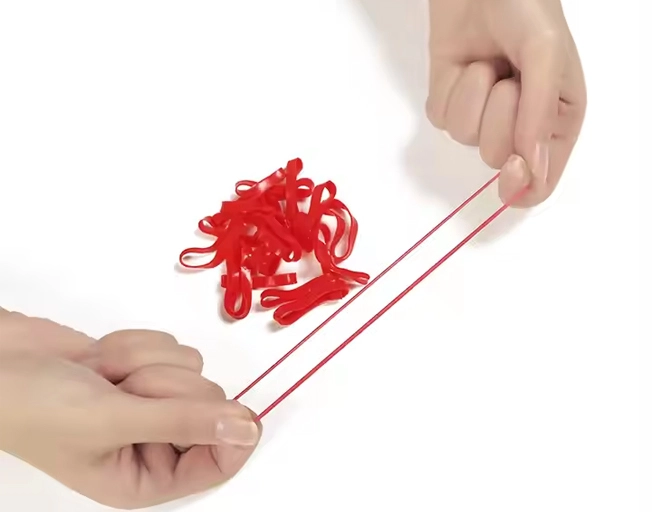
Room temp rules. Aim for 59°F – 77°F (15°C – 25°C) with steady humidity around 50%. There, chains hum along, delivering peak stretch without drama. Stray outside, and you court trouble.
Storage counts big. Dark, dry spots beat sunny shelves. A drawer or box works; garage extremes don’t. For bulk users, climate-controlled areas shine—think office supply closets over sheds.
Humidity plays sidekick. Too dry, bands dry-crack. Too damp, mold creeps in. Balance keeps them lively.
Here’s a simple guide to zones:
|
Condition |
Temp Range |
Humidity Tip |
Best For |
|
Ideal Daily Use |
59°F – 77°F (15°C – 25°C) |
40-60% |
All tasks—office, home, packing |
|
Heat Caution |
Above 77°F (25°C) |
Keep low |
Short bursts; monitor for sag |
|
Cold Boost |
32°F – 59°F (0°C – 15°C) |
Moderate |
Extra grip needs, like crafts |
|
Avoid Zone |
Below 32°F or above 95°F (-0°C or 35°C+) |
Stable |
Long storage; risk of damage |
Stick here, and your bands last longer. It’s common sense that pays off.
Everyday Tips to Keep Your Rubber Bands in Top Shape
No one’s got time for band fails. These straightforward habits shield against temp tricks.
- Store Smart: Pick cool, dark nooks. Avoid car trunks or radiators. A simple bin in a closet does the job.
- Test Before Trust: Give a quick stretch in new conditions. Feels off? Rest or replace.
- Layer for Extremes: In heat, use doubles for heavy lifts. Cold? Warmer spots pre-use.
- Rotate Stock: First in, first out. Old bands hide weaknesses.
- Go Thick When Needed: Wider bands shrug off temp shifts better for tough spots.
A warehouse manager cut waste 30% with these. At home, they mean fewer trips to the store. Small steps, big wins.
Meet Your TPU Partner: Zhejiang VIET-Y Rubber Products Co., Ltd.
Before we wrap, a quick nod to a key player in this space. Zhejiang VIET-Y Rubber Products Co., Ltd. stands as a go-to supplier for rubber band series products. Based in Yiwu, China, they’ve built a name since 2010 on solid quality and fair prices. Their lineup hits global needs, from everyday ties to custom fits, all backed by a team that puts customers first. If you’re hunting reliable bands that hold through seasons, they’re worth a look.
Wrapping It Up
Temperature’s grip on rubber bands boils down to balance. Heat loosens the fight; cold amps it up, but both extremes wear down performance over time. By grasping these effects, you stay ahead—choosing right, storing wise, and using smart. It’s about reliability in your hands, whether tying a gift or sealing a deal. Next time you reach for that loop, remember: a little care stretches far.
Frequently Asked Questions
How do the effects of temperature on rubber band performance show up in daily use?
Warm days might make bands slip on slick surfaces, while cold snaps give a tighter hold but risk snaps. Keep them at room temp for steady work.
What’s the best way to fight high temperature’s toll on rubber bands?
Shade them from sun and heat sources. Short exposure is fine, but long hauls demand cooler spots to keep elasticity sharp.
Can low temperatures actually improve rubber band performance?
Yes, mild chill boosts stretch and snap. Just dodge deep freezes to avoid cracks—think 40°F (4°C) as a sweet chill.
How should I store rubber bands to dodge temperature swings?
A cool, dark drawer at 60-70°F (15-21°C) works best. Skip garages or windowsills; steady spots mean longer life.
Do all rubber bands react the same to temperature changes?
Most natural ones do, but thicker or blended types hold up better. Test yours in your setup for peace of mind.

Latest News
-
Feb. 26, 2026WHY RUBBER BANDS ARE SO IMPORTANT NOWDiscover why rubber bands are essential for office organization, productivity, and cost-effective administrative solutions.
-
Feb. 19, 2026The Safety and Compliance of TPU Elastics in Food Contact and Hygiene ApplicationsDiscover the safety and compliance of TPU elastics for food packaging and hygiene applications, ensuring durability and reliability.
-
Feb. 12, 2026Can TPU Rubber Bands Be Used in Medical or Health-Related ProductsTPU bands, medical products, compression garments, prosthetics, healthcare applications


