

Choosing Heat-Resistant Rubber Bands for Hot Warehouses
Time : Sep 17, 2026 View : 4
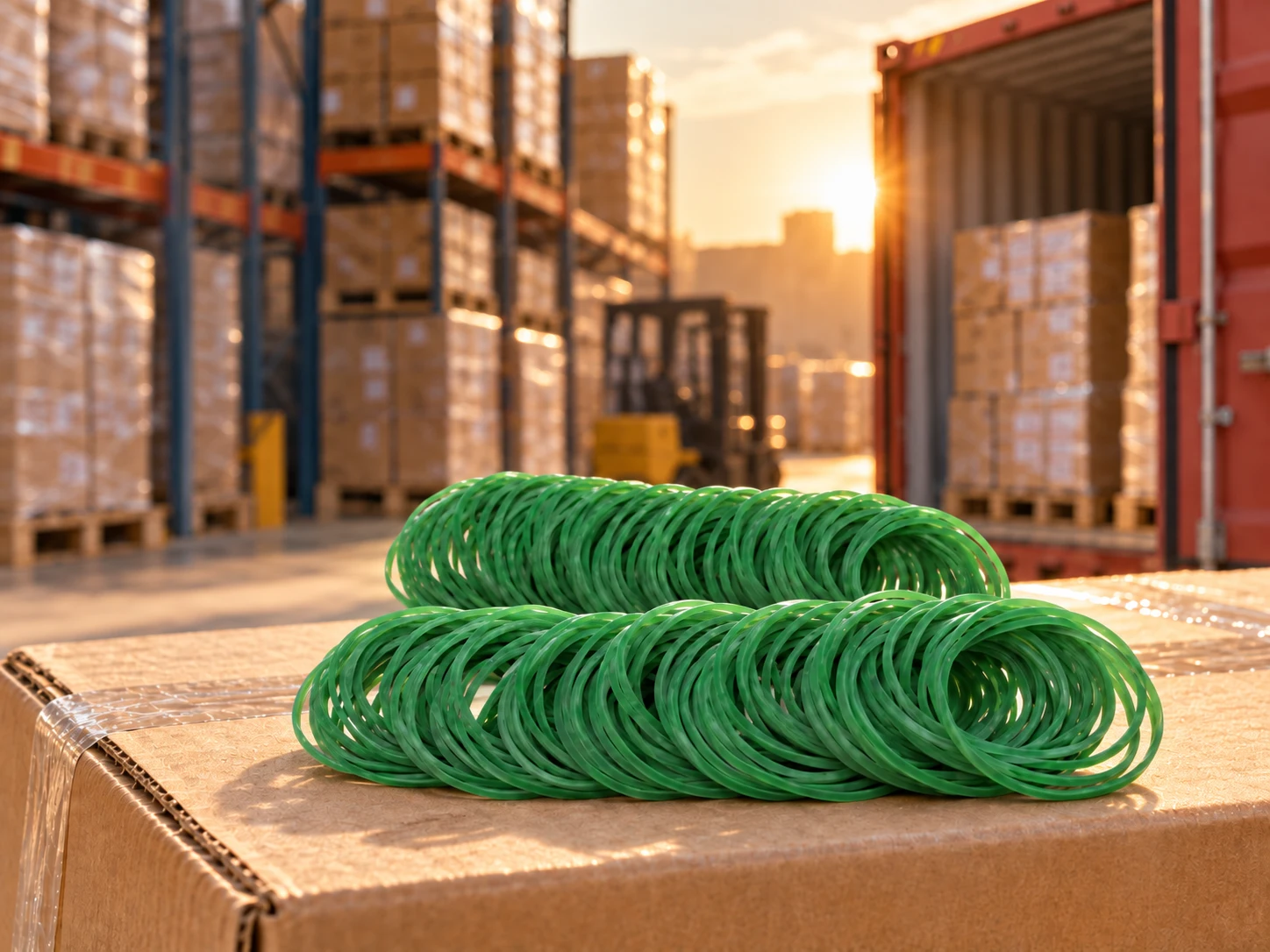
For hot warehouses and shipping containers, the right rubber band depends on more than the phrase “heat resistant.” Buyers should match the band material to actual temperature exposure, sunlight, humidity, chemicals, stretch load, and storage duration. A band that performs well in a shaded warehouse may age faster inside a sun-heated container.
The practical starting point is to compare silicone, EPDM, and natural rubber, then confirm dimensions and performance with a supplier. VIET-Y’s Rubber Series includes customizable rubber-band formats, including a listed heat-resistant natural rubber option, but the final material should always be verified against the application.
Why Heat Changes Rubber Band Performance
Heat accelerates aging in elastomers. Over time, a band may lose elasticity, become tacky or brittle, crack at the surface, or take a permanent set after being stretched. These problems are more likely when heat is combined with ultraviolet exposure, ozone, condensation, oils, cleaning chemicals, or long-term tension.
Shipping containers can create severe temperature cycles. A load may experience cool nights, direct solar heating during the day, and repeated expansion and contraction during inland or ocean transport. Warehouse bands can face a different pattern: continuous indoor heat, contact with cartons or plastic film, and repeated handling by workers or automated equipment.
Before choosing a material, define:
-
The expected minimum and maximum air temperature.
-
Whether the band touches a hot surface.
-
Exposure to direct sunlight or outdoor storage.
-
Required stretch, recovery, and holding force.
-
Contact with oils, solvents, food, moisture, or cleaning agents.
-
Expected storage and transport duration.
This operating profile is more useful than selecting a product solely because its title includes “high temperature.”
Comparing Materials for Hot Applications
Silicone rubber bands
Silicone is often considered when a wide temperature range, flexibility, and resistance to weathering are important. It can remain elastic in conditions where ordinary natural-rubber bands may harden or lose recovery. Silicone is also commonly selected for applications requiring clean surfaces or repeated washing, subject to the exact formulation.
However, silicone is not automatically the best choice for every logistics task. Its holding force, tear resistance, friction, and cost may differ from other elastomers. A silicone band should be tested at the actual size and stretch ratio required for the load.
EPDM rubber bands
EPDM is frequently evaluated for outdoor, heat, ozone, and weather exposure. It can be a practical option for containers stored outside or for warehouse areas with strong sunlight and fluctuating conditions. Buyers should still verify compatibility with oils and hydrocarbon-based substances, because resistance varies by compound and formulation.
EPDM may be more appropriate than ordinary natural rubber when long-term environmental exposure matters more than maximum rebound. The supplier should confirm the applicable temperature range, hardness, and tensile behavior for the intended band geometry.
Natural rubber bands
Natural rubber is valued for elasticity, grip, and efficient recovery. It can work well for bundling cartons, produce, bags, and light industrial items when the environment is moderate and the band is not exposed continuously to severe heat or sunlight.
VIET-Y lists a heat-resistant natural rubber band made from 100% natural rubber, with a stated inner diameter of 32 mm, folding length of 50 mm, width and thickness of 0.9 mm, and molding or cutting capability. These details describe one product format, not a universal performance limit. Buyers should request confirmation for their temperature, load, and exposure conditions.
For more background on material tradeoffs, see VIET-Y’s natural-versus-synthetic rubber comparison.
Selecting Bands for Warehouses and Containers
Material is only one part of the decision. A band that is chemically suitable can still fail if it is undersized, overstretched, or exposed to a sharp edge.
For warehouse use, consider whether the band will remain stretched for hours or days. Continuous tension can cause stress relaxation, especially at elevated temperatures. If workers repeatedly remove and replace the band, recovery and tear resistance may matter more than peak holding force.
For shipping containers, examine the combined effects of heat, sunlight, vibration, and dwell time. A band used to close a bag may need different properties from one used to secure bundled cartons. If the band contacts painted metal, plastic film, or treated wood, friction and surface compatibility should be checked.
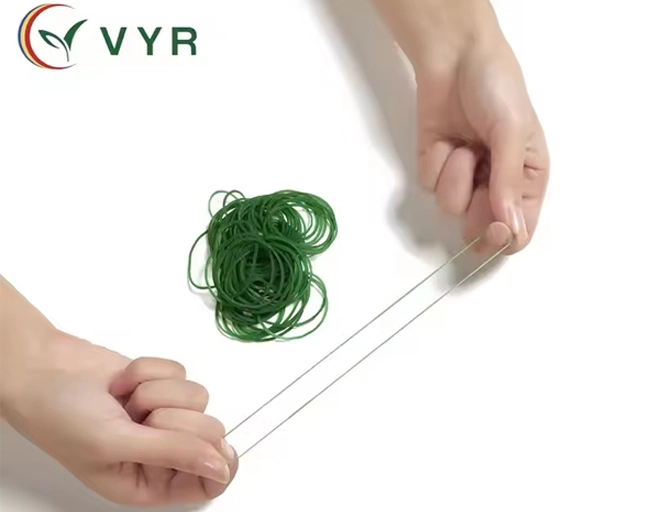
Size also matters. Specify inner diameter, flat width, thickness, and the target stretched length. Avoid assuming that a larger band is automatically stronger; excessive stretch can shorten service life. A controlled fit usually produces more consistent retention and less permanent deformation.
How to Write a Useful Rubber Band Specification
A procurement specification should include:
-
Material preference or approved material family.
-
Inner diameter, folding length, width, and thickness.
-
Required stretch range and holding application.
-
Temperature exposure, including short-term peaks.
-
UV, moisture, ozone, and chemical conditions.
-
Color, packaging, labeling, and quantity.
-
Sample and test requirements before bulk production.
Ask for samples in the final dimensions rather than testing a different size. Request a simple aging or exposure check that reflects the real warehouse or container environment. Record whether the band remains flexible, returns close to its original size, and holds the intended item without slipping.
Where VIET-Y Fits the Sourcing Process
VIET-Y presents rubber, TPU, TPR, and latex product series and supports OEM/ODM customization. Its listed heat-resistant natural rubber band can be a starting point for buyers who need elastic bundling in a defined size. The supplier also states that products can be customized by color and size, subject to confirmation.
For broader product discovery, review the VIET-Y Rubber Series. For a specific reference format, see the heat-resistant natural rubber band product page.
If your application requires a different elastomer, do not assume that a natural-rubber specification can be substituted directly. Send the operating profile and required dimensions so the technical team can confirm whether the proposed material and construction are suitable.
Procurement Checklist Before Approval
Before placing a bulk order, confirm:
-
The material matches the real heat and weather exposure.
-
Dimensions are measured in the relaxed state.
-
The band is not routinely stretched beyond the recommended range.
-
Samples have been checked after heat, UV, moisture, or chemical exposure.
-
Packaging prevents premature aging during storage.
-
Lot identification and replacement criteria are defined.
Storage also affects service life. Keep unused bands away from direct sunlight, excessive heat, ozone sources, and chemicals. VIET-Y’s guide to storing rubber bands correctly provides additional handling considerations.
Conclusion
The best heat-resistant rubber band is the one whose material, dimensions, and aging behavior match the complete logistics environment. Silicone may suit wide temperature swings, EPDM may be useful for weather and ozone exposure, and natural rubber may remain attractive where elasticity and cost are priorities. Confirm the choice with application-specific samples before committing to volume.
FAQs
Are ordinary natural rubber bands suitable for hot shipping containers?
They may work for short, moderate exposure, but continuous heat, sunlight, and long dwell times can accelerate aging. Test the actual band size and load before shipment.
Is silicone always better than natural rubber?
No. Silicone may offer broader temperature flexibility, while natural rubber can provide strong elasticity and grip. The correct choice depends on load, exposure, recovery, and cost.
What information should I send a supplier?
Provide material preference, dimensions, stretch length, temperature range, sunlight or chemical exposure, packaging requirements, and estimated quantity.
For an application review or RFQ, contact the VIET-Y technical team with your band dimensions, load, operating conditions, drawings or photos, and expected order quantity.

Latest News
-
Jun. 04, 2026TPU Elastics Safety & Compliance for B2B Food and Hygiene Packaging 2026VIET-Y offers high elastic food grade TPU rubber bands with FDA and EU compliance for food and hygiene packaging. Superior durability, abrasion resistance and safety. Contact us for samples and bulk custom solutions.
-
Jun. 04, 2026Customizable Rubber Bands: Key to B2B Organization and Efficiency in 2026VIET-Y specializes in high-elasticity natural rubber bands and customizable elastic bands for B2B logistics, offices, and supply chains. Durable, color-coded solutions with strong rebound deliver reliable performance and workflow efficiency. Contact us for a free quote.
-
May. 28, 2026Reliable Wholesale Rubber Band Suppliers: B2B Sourcing Guide 2026VIET-Y offers reliable wholesale rubber band solutions with strict quality control, OEM/ODM capability, timely delivery, and ISO certification. This B2B sourcing guide helps buyers select trusted suppliers for sustainable supply chains in 2026.


