

Best Rubber Bands for Rubber Band Ball Kits in 2026: B2B Supply Guide
Time : Jul 30, 2026 View : 100
Rubber band ball products have become a practical B2B category for educational suppliers, stationery wholesalers, promotional distributors, private-label kit companies, and corporate gift programs. Commercial success depends on material consistency, controlled dimensions, packaging accuracy, and repeatable supply. VIET-Y is a rubber products manufacturer and rubber band producer established in Yiwu, China, offering natural rubber options and OEM/ODM support for custom size, color, logo, and packaging requirements.
Why Rubber Band Ball Kits Need a B2B Specification
A Kit Is a Controlled Product
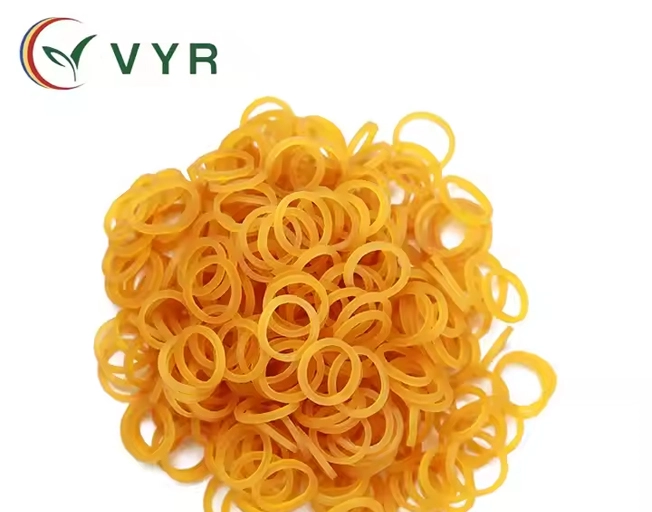
A commercial rubber band ball kit must create a repeatable assembly experience. Random assortments can cause uneven growth, breakage, inconsistent colors, and variable completion times. The specification should define material, flat length or diameter, cut width, thickness, color ratio, piece count or net weight, and dimensional tolerance.
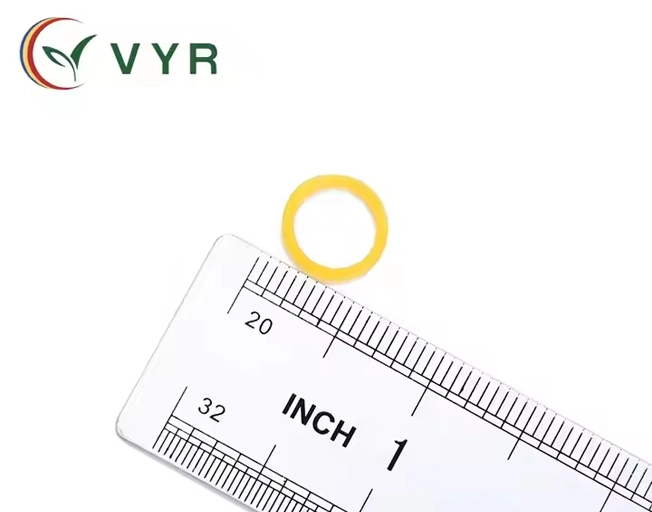
Classroom packs need moderate stretch and easy handling. Promotional, office, and gift programs prioritize controlled colors, clean surfaces, branded packaging, and efficient assembly.
Total Cost Matters More Than Kilogram Price
Procurement teams should compare cost per saleable kit. A low material price can be offset by breakage, packing errors, rejected colors, repacking labor, or inconsistent finished-ball size. Stable bulk rubber bands support predictable output, fewer claims, and easier replenishment.
Best Material for Rubber Band Ball Production
Natural Rubber Supports Stretch and Recovery
Natural rubber is commonly selected where extensibility, rebound, and secure layer-to-layer grip are important. These properties help each band conform to the expanding sphere while maintaining tension. A suitable compound should stretch smoothly, recover after release, and resist premature cracking.
Specifications should identify the elastomer type and address odor, tackiness, surface bloom, cleanliness, and color transfer.
Performance Requires Measurable Criteria
Descriptions such as “high elasticity” are insufficient without defined test conditions. A purchase specification can include tensile strength, elongation at break, tensile set, and recovery after controlled extension. ISO 37:2024 and ASTM D412-16(2021) are recognized methods for evaluating tensile stress-strain properties of vulcanized rubber and thermoplastic elastomers.
Application testing should also build several sample balls. Records can capture breakage per 100 wraps, assembly time, final diameter, visible gaps, and short-term storage performance. This turns a subjective trial into comparable procurement data.
Selecting Sizes, Thicknesses, and Kit Ratios
Small Bands Establish the Core
Smaller bands grip a compact starter shape and create a firm center. Too many short bands, however, increase assembly time. The inner-layer allocation should create a stable core without dominating total pack weight.
A separate starter core may be included when permitted, but smaller sizes are still needed to lock the first layers.
Medium and Large Bands Build Volume
Medium bands normally form the main structure, while larger bands cover the expanding circumference and accelerate final growth. The best rubber bands for making a rubber band ball are therefore rarely one universal size. A controlled progression usually performs better than an unmanaged assortment.
Thin bands stretch easily but add volume slowly. Wider or thicker bands build faster but require more wrapping force. The mix should match the target age grade, activity time, finished diameter, and cost target.
Color Planning for Wholesale Rubber Band Kits
Define Assorted Colors Numerically
Colored rubber bands can differentiate school programs, seasonal ranges, corporate campaigns, and distributor-exclusive SKUs. Color ratios should be stated numerically rather than described only as “assorted.” A defined ratio improves consistency between samples, pilot runs, and repeat orders.
Color approval should use physical masters or controlled references and cover lighting variation, transfer, and packaging residue.
Approve Major Color Families Separately
A private label rubber band ball kit may use a fixed palette, alternating sequence, or randomized mix. Pigments and formulations can affect physical behavior, so separate approval data for major color families is safer than assuming one result covers every color.
Packaging and Order Configuration
Choose Count, Weight, or Functional Yield
Piece-count packing supports a fixed component list, but dimensional changes can alter total weight. Weight-based packing improves line efficiency, although band quantity may vary. Functional-yield packing specifies enough material to complete a target ball diameter under a defined assembly method.
The purchase order should state the packing basis, allowed variance, inner-pack format, instruction-card version, barcode position, carton quantity, carton marks, and pallet configuration. For bulk rubber bands for craft kits, these details often influence operating cost more than a minor unit-price difference.
Approve Packaging Before Production
Pre-production approval should cover band samples, artwork, warning text, pouch or box dimensions, sealing quality, and carton layout. A retained golden sample creates a common reference for seal checks, packing audits, barcode scans, and transport testing.
Quality Control and Storage
Use a Written Inspection Plan
A practical control plan includes dimensional measurement, visual inspection, color verification, odor review, recovery testing, breakage testing, and packing verification. Sampling levels and acceptance criteria should be agreed before production.
Traceability should connect cartons to production date, material batch, color batch, and inspection record. This supports faster investigation when unusual breakage or color inconsistency is reported.
Protect Inventory During Storage
Rubber products can deteriorate when exposed to unsuitable heat, light, humidity, ozone sources, or contaminated surfaces. ISO 2230:2026 provides current guidance covering inspection, records, packaging, and storage of vulcanized or thermoplastic rubber products before circulation.
Warehouse procedures should preserve sealed packaging, use first-in-first-out rotation, avoid direct sunlight, and separate rubber bands from ozone-generating equipment. Shelf-life commitments should be supported by supplier data and verified under actual warehouse conditions.
Supplier Evaluation for 2026 B2B Purchasing
Test the Complete Supply Process
A capable custom rubber band ball kit supplier should provide documented specifications, representative samples, controlled color matching, packaging support, lead times, and batch records. Commercial review should cover minimum order quantity, artwork charges, sample timing, peak-season capacity, shipment terms, and corrective-action procedures.
A pilot order remains the strongest supplier test because it shows whether sample quality can be repeated at production scale and whether packing, documents, and delivery coordination meet approved requirements.
Build a Reorder-Ready File
The sourcing file should include dimension tables, material description, color masters, packing artwork, inspection criteria, retained samples, and change-control rules. Changes in compound, pigment, size, packaging material, or production route should require written approval before shipment.
FAQ
What Rubber Bands Are Best for Rubber Band Ball Kits?
Natural rubber bands are often suitable because they provide strong stretch, recovery, and grip. Final selection should depend on measured performance, target age grade, kit size, and storage conditions.
Should Rubber Band Kits Contain Mixed Sizes?
A controlled mix is generally more efficient. Smaller bands stabilize the core, medium bands create structure, and larger bands build the outer layers faster.
How Should Bulk Rubber Bands Be Tested?
Testing should cover dimensions, tensile behavior, recovery, breakage during ball assembly, color consistency, surface condition, odor, packing accuracy, and performance after storage.
Is Count-Based or Weight-Based Packing Better?
Count-based packing supports a fixed component list, while weight-based packing improves production efficiency. Functional-yield packing works when the main requirement is completion of a specified ball diameter.
What Documents Should Accompany a B2B Order?
Typical documents include the approved specification, sample record, packing artwork, inspection report, traceability data, commercial documents, and required compliance declarations.
Develop a Factory-Direct Rubber Band Ball Kit
Start a B2B Sample and Specification Review
VIET-Y operates as a rubber band manufacturer and factory serving bulk and customized rubber product requirements. Procurement teams, wholesalers, educational suppliers, stationery distributors, and private-label kit businesses can submit target dimensions, material preferences, color ratios, pack quantity, artwork, annual volume, and destination market to request sample development and a factory-direct quotation through the official contact channel.

Latest News
-
Jun. 04, 2026TPU Elastics Safety & Compliance for B2B Food and Hygiene Packaging 2026VIET-Y offers high elastic food grade TPU rubber bands with FDA and EU compliance for food and hygiene packaging. Superior durability, abrasion resistance and safety. Contact us for samples and bulk custom solutions.
-
Jun. 04, 2026Customizable Rubber Bands: Key to B2B Organization and Efficiency in 2026VIET-Y specializes in high-elasticity natural rubber bands and customizable elastic bands for B2B logistics, offices, and supply chains. Durable, color-coded solutions with strong rebound deliver reliable performance and workflow efficiency. Contact us for a free quote.
-
May. 28, 2026Reliable Wholesale Rubber Band Suppliers: B2B Sourcing Guide 2026VIET-Y offers reliable wholesale rubber band solutions with strict quality control, OEM/ODM capability, timely delivery, and ISO certification. This B2B sourcing guide helps buyers select trusted suppliers for sustainable supply chains in 2026.


