

5 Common Latex Rubber Band Pitfalls and How to Fix Them Fast
Time : Nov 27, 2025 View : 113

Latex rubber bands are those quiet workhorses we all reach for without thinking. They bundle papers, secure packages, hold ponytail hair in place, even keep greenhouse plants tied to stakes. But grab the wrong storage spot or stretch them too far, and they snap, crumble, or turn into sticky messes exactly when you need them most.
I’ve watched entire boxes of bands go bad overnight because someone left them on a sunny windowsill. I’ve also seen people blame “cheap quality” when the real problem was how they handled them. Good latex bands can last years if treated right — and fall apart in weeks if treated wrong. Here are the five mistakes I see most often, plus the simple fixes that make a huge difference.
Mistake 1: Leaving Them in Heat, Sunlight, or Freezing Cold
Natural latex hates temperature swings. Park a box on a dashboard in summer or in an unheated garage in winter and the bands dry out, crack, or get brittle in no time.
What actually happens:
-
Above 40 °C (104 °F) the rubber cooks and loses elasticity.
-
Direct sunlight speeds up UV damage — bands turn yellow then snap like dry twigs.
-
Below freezing they stiffen and break the moment you stretch them.
How to avoid it Store them in a cool, dark drawer or cupboard. Ideal range is 0–25 °C with normal room humidity. If you buy in bulk, keep the master box sealed and only open what you need for the month. A simple plastic bin away from windows works wonders.
Mistake 2: Stretching Them Way Past Their Limit
We’ve all done it — grab the smallest band in the pack and yank it around a fat stack of files. It holds for a day, then explodes across the room.
Latex bands have a safe stretch limit, usually 6–7 times their resting length before the rubber molecules start tearing. Go further and you’re asking for trouble.
Quick rule of thumb
| Job | Best band size (laid flat) | Safe stretch limit |
|---|---|---|
| Letters or cash | 30–50 mm | 5–6× |
| Small boxes or veggie bunches | 60–80 mm | 6–7× |
| Large parcels or posters | 100 mm+ | 5–6× (use thicker band) |
Pick a band that only needs to stretch 3–4 times its length. It will last ten times longer and almost never snap in your face.
Mistake 3: Ignoring the Latex Allergy Risk
About 1–6 % of people have latex sensitivity, and repeated contact can turn a mild reaction into a serious one. Offices, hair salons, and warehouses sometimes forget this.
Fix it easily
-
Ask your team or family if anyone reacts to latex.
-
Keep a box of nitrile or synthetic bands for those who need them.
-
Wash hands after heavy use — powdered latex bands can leave residue that triggers airborne reactions.
A small courtesy that keeps everyone happy and safe.
Mistake 4: Using Old or Already-Stretched Bands for Important Jobs
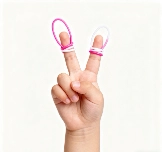
Rubber ages even when sitting still. After 2–3 years most latex bands start to lose strength, especially if the bag has been opened and closed a lot (oxygen is the enemy).
Signs your bands are past their prime:
-
Slight sticky feel
-
Dull or yellowish color
-
They break with very little pull
Simple habit: date the bag when you open it. Toss anything over 3 years old or that shows those warning signs. It costs pennies to replace them and saves the frustration of a band breaking mid-project.
Mistake 5: Mixing Sizes and Types in One Big Jar
That giant jar of mixed bands looks organized, but you always end up fishing for the one size you actually need — and half the bands inside are already half-dead from age.
Better system Keep three or four clear containers:
-
Small (hair/office)
-
Medium (vegetables, general)
-
Large/thick (packaging, industrial)
-
Non-latex (for allergy folks)
You’ll waste less time and the bands stay fresher because you open each container less often.
Quick-Reference Cheat Sheet
| Mistake | What goes wrong | Easy fix |
|---|---|---|
| Heat/sun/cold exposure | Dry, brittle, snap instantly | Cool, dark storage 0–25 °C |
| Over-stretching | Sudden breaks, short life | Choose right size, stretch <6× |
| Ignoring allergies | Skin rash, breathing issues | Offer synthetic option, wash hands |
| Using expired bands | Unreliable, sticky mess | Date bags, replace after 2–3 years |
| Mixed messy storage | Wasted time, faster aging | Separate containers by size/type |
Follow these habits and your latex rubber bands go from “they never last” to “I still have plenty from last year.”
About Zhejiang VIET-Y Rubber Products Co., Ltd.
Located in Yiwu City, Zhejiang Province, Zhejiang VIET-Y Rubber Products Co., Ltd. has been making rubber bands since 2010. We produce four main lines — classic Rubber Series, crystal-clear TPU Series, colorful TPR Series, and high-strength Latex Series — all built on natural rubber and strict quality checks. Whether you run an office, pack shipments, style hair, or bundle produce, we supply bands that hold strong and last long, and arrive on time, anywhere in the world.
Conclusion
Little changes in how you buy, store, and use latex rubber bands add up to big savings in time, money, and frustration. Treat them with the same respect you give any tool — keep them cool, dry, dark, choose the right size, and retire them before they retire on you — and they’ll perform reliably for years.
FAQs – Common Mistakes When Using Latex Rubber Bands
Q: Do all latex rubber bands smell bad?
A: Fresh natural latex has a mild rubber scent that fades quickly. If your bands smell strong or chemical-like, they’re probably old or poorly stored. Proper storage (cool and dark) keeps the smell minimal.
Q: How do I know if a latex rubber band is still good?
A: Give it a gentle stretch. If it returns to shape smoothly and feels slightly tacky (not sticky or dry), it’s fine. If it feels stiff, crumbly, or leaves powder on your fingers, replace it.
Q: Can I use latex rubber bands for food packaging?
A: Yes, as long as they’re clean and food-grade. Our latex bands are made from pure natural rubber with no harmful additives, but always give them a quick rinse if they’ll touch food directly.
Q: What’s the fastest way to stop bands from snapping in my face?
A: Never stretch with your face in line with the band, and always use a size that only needs moderate pull. A band that feels “tight but comfortable” when applied is perfect — if you have to fight it, grab a bigger one.
Q: Are thicker latex bands always better?
A: Not always. Thicker bands are stronger but less stretchy. Use thick for heavy loads that don’t need much elongation, and thinner high-elastic bands for hair or light bundling. Matching the band to the job prevents 90 % of breakage problems.

Latest News
-
Feb. 26, 2026WHY RUBBER BANDS ARE SO IMPORTANT NOWDiscover why rubber bands are essential for office organization, productivity, and cost-effective administrative solutions.
-
Feb. 19, 2026The Safety and Compliance of TPU Elastics in Food Contact and Hygiene ApplicationsDiscover the safety and compliance of TPU elastics for food packaging and hygiene applications, ensuring durability and reliability.
-
Feb. 12, 2026Can TPU Rubber Bands Be Used in Medical or Health-Related ProductsTPU bands, medical products, compression garments, prosthetics, healthcare applications


