

How Much Do Custom Rubber Bands Cost? 5 Key Factors
Time : Sep 24, 2026 View : 32
Custom rubber band pricing is not a fixed per-piece number. For a business order, the useful question is: what specification produces a reliable band at the required quantity and packing format? A quote changes with material, finished dimensions, color requirements, quantity, and packing method.
For bundling, bag closure, produce handling, or other packaging workflows, a very low unit price can become a poor purchase if the band is undersized, difficult to identify on the line, or packed in a way that slows replenishment. This guide explains the cost levers so buyers can request a clear custom rubber band quotation without assuming that a retail pack price applies to a factory order.
Why Custom Rubber Band Prices Vary
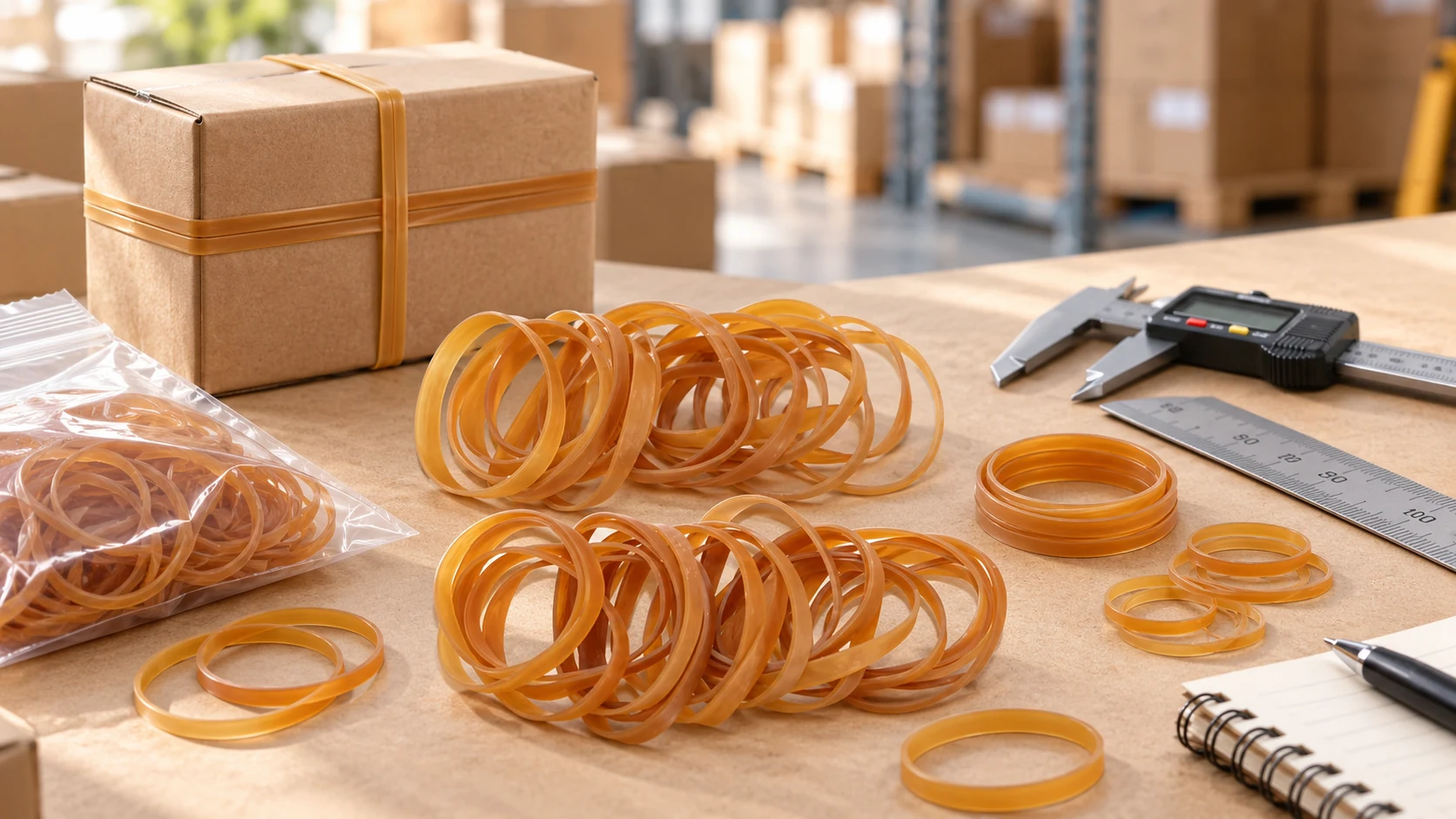
A standard stock band can be quoted from an existing size, compound, color, and packing routine. A custom order may require a different material, dimensions, color, or a defined pack count. Each decision can add material consumption, setup, handling, quality checks, or packing labor. The final unit price therefore has to be read alongside the MOQ, total order value, and shipment terms.
Procurement teams should also consider the cost of use: bands needed per package, identification at the line, required hold, and refill frequency. These details determine whether a lower-priced alternative is actually economical.
The Five Main Cost Factors
1. MOQ and Order Quantity
MOQ matters because material preparation, machine setup, sampling, inspection, labeling, and carton preparation do not scale down neatly. Spread across a larger run, those activities represent less cost per band. A small custom order may therefore have a higher unit price even when the band uses little material.
Ask for several practical quantity breaks. Compare the requested quantity with the next production-efficient quantity and a planned carton or pallet pattern. This exposes the trade-off between inventory carrying cost and unit cost.
2. Material Selection
Material is a functional choice before it is a price choice. Natural rubber and latex-based elastic bands are commonly considered where elasticity is important, while a project may call for another material family because of handling or environmental requirements. The relevant question is which approved material can meet the application after size, stretch, storage, and contact requirements are verified.
VIET-Y presents rubber series, latex series, TPR, and TPU product series. A buyer evaluating a custom order should identify the intended material family early and state any constraints, such as latex sensitivity, exposure conditions, or food-contact requirements. Where a requirement is regulated or application-critical, material suitability and supporting documentation should be confirmed for the exact product rather than inferred from a general category name.
3. Size, Cross-Section, and Shape
Dimensions influence both material use and production difficulty. A longer or wider band generally consumes more material, while thickness affects the cross-section and behavior under stretch. In practice, suppliers need the flat length, width, thickness, and any shape or joint details to price the part correctly. A generic statement such as “large rubber bands” is rarely enough for a production quotation.
The band must fit the item or bundle with an appropriate working stretch; otherwise breakage, loose packs, or excess consumption can erase the apparent savings. When replacing an existing band, send its dimensions, a sample if available, and the typical bundle. For new designs, use a drawing or dimensional sketch.
4. Color and Identification Requirements
Natural, standard, or commonly run colors may be easier to plan than a tightly specified custom shade. A color requirement can affect material preparation, changeover, minimum batch size, and the risk of color variation between runs. The commercial effect depends on the material, color target, order volume, and supplier process, so it should be quoted rather than assumed.
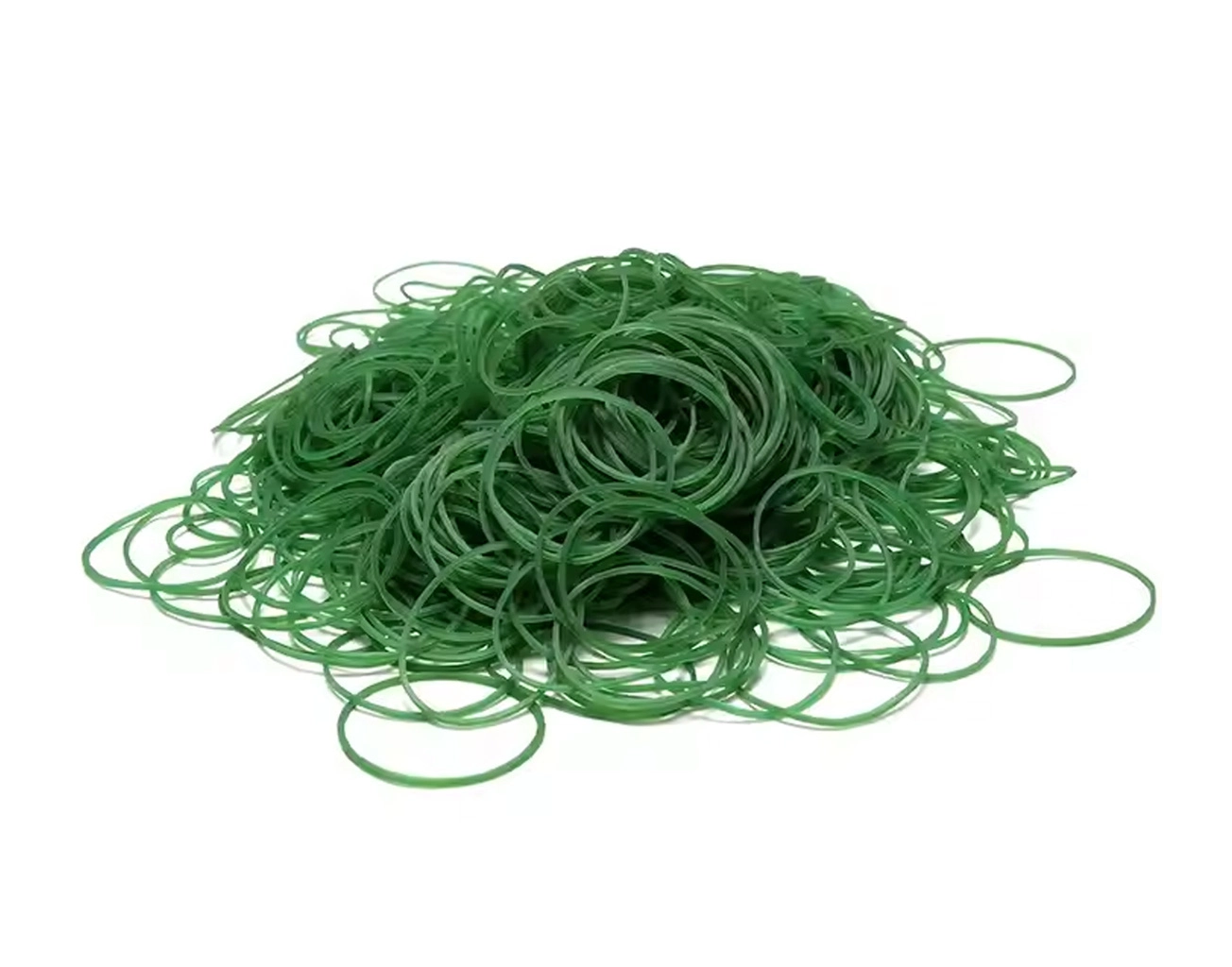
Color may help operators separate sizes, production lines, customers, or package types. State whether it is functional identification or visual preference. If matching is important, provide an approved reference and agree on sample review before the full order is released.
5. Packaging and Delivery Format
Packaging is often overlooked in early price comparisons. Bulk cartons, counted inner bags, small retail-ready packs, labels, barcodes, and special carton counts all affect handling and packing cost. The right format depends on where the bands will be consumed. A high-volume packing line may benefit from a replenishment-friendly bulk pack, while a distributor may need consistent inner quantities and clear labels.
Ask for pack count per inner unit and carton, carton dimensions and gross weight, label content, and whether packing changes the MOQ. These details affect receiving, warehouse slots, picking, and line-side replenishment. They also make freight comparisons more meaningful.
Compare Quotes on the Same Basis
Use one written specification for every supplier. This is especially important when evaluating custom rubber bands for packaging, because a vague request can produce quotes for different materials, sizes, or pack formats.
| Compare this item | Confirm before choosing |
|---|---|
| Product definition | Material family, flat length, width, thickness, shape, and approved sample or drawing |
| Commercial basis | MOQ, quantity breaks, unit of pricing, currency, tooling or setup charges, and quote validity |
| Quality basis | Required application test or inspection criteria, acceptable variation, and approval process |
| Packaging basis | Count per inner pack and carton, labels, carton dimensions, and gross weight |
| Delivery basis | Production status, shipment terms, destination, and any documents needed for import |
Avoid treating two quotations as comparable until every line refers to the same product definition. If one supplier offers a standard size and another offers a made-to-drawing part, they may solve different problems despite similar descriptions.
Build a Quote Request That Reduces Rework
An effective RFQ lets the supplier determine feasibility and price without repeated clarification. Include the application, target material or acceptable alternatives, dimensions, color requirement, expected stretch or holding need, and planned repeat quantity when known. Add the desired packaging format and destination.
For an existing item, photographs and a physical sample can help, but measurements should still be written down. For a new item, a dimensioned drawing is preferable. Request a pre-production sample or other agreed approval step when function, appearance, or packing is critical.
Working With VIET-Y on a Custom Requirement
VIET-Y’s official product navigation includes rubber and latex series, while its OEM/ODM service information supports custom-project discussions. For a custom band inquiry, give the technical team the material preference, dimensions, color, use case, quantity, packing expectation, and destination. This lets the request be assessed against a relevant product series instead of being priced as an undefined generic band.
If the requirement concerns package closure, include the package type, bundle size, anticipated stretch, and operating environment. If it is an identification application, specify the color reference and the process the color will support. A clear brief makes it more likely that the quotation addresses the usable product and not merely the lowest possible band.
Conclusion
Custom rubber band cost is shaped by the full specification, not just the raw band. Define the function and packing workflow first, then compare matched quotes with the same technical and delivery basis.
FAQs
Is there a standard price for custom rubber bands?
No. A reliable price depends on the specification, quantity, material, dimensions, color, packaging, and delivery requirements. A supplier should quote the defined item rather than a broad product name.
Does a larger MOQ always lower total cost?
It can lower unit cost by spreading setup and packing work across more bands, but the total purchase and inventory cost will be higher. Compare quantity breaks against expected consumption and storage capacity.
What size information should an RFQ include?
Provide flat length, width, thickness, shape, and the item or bundle being secured. A drawing, existing sample, or both can reduce uncertainty.
Can color affect custom rubber band pricing?
Yes. The effect depends on the material, shade requirement, order volume, and production process. Provide a color reference when color consistency is important.
Request a Quote
For a custom rubber band fit check or RFQ, contact VIET-Y with the material preference, dimensions or drawing, application, target quantity, color requirement, packaging format, and destination.

Latest News
-
Jun. 04, 2026TPU Elastics Safety & Compliance for B2B Food and Hygiene Packaging 2026VIET-Y offers high elastic food grade TPU rubber bands with FDA and EU compliance for food and hygiene packaging. Superior durability, abrasion resistance and safety. Contact us for samples and bulk custom solutions.
-
Jun. 04, 2026Customizable Rubber Bands: Key to B2B Organization and Efficiency in 2026VIET-Y specializes in high-elasticity natural rubber bands and customizable elastic bands for B2B logistics, offices, and supply chains. Durable, color-coded solutions with strong rebound deliver reliable performance and workflow efficiency. Contact us for a free quote.
-
May. 28, 2026Reliable Wholesale Rubber Band Suppliers: B2B Sourcing Guide 2026VIET-Y offers reliable wholesale rubber band solutions with strict quality control, OEM/ODM capability, timely delivery, and ISO certification. This B2B sourcing guide helps buyers select trusted suppliers for sustainable supply chains in 2026.


