

Rubber Bands for Florists: How to Bundle Bouquets Without Damaging Stems
Time : Aug 28, 2026 View : 66
Bouquet bundling is a small step with measurable consequences for wholesale presentation, processing speed, cold-chain stability, and flower loss. A band that is too narrow or tight can create concentrated pressure, bruise soft stems, or cause breakage; a loose band can slip after hydration, vibration, or condensation. Mechanical damage accelerates quality loss in cut flowers, while commercial postharvest guidance recommends secure bunching without enough tension to break stems.
For flower wholesalers, floral-supply distributors, and bouquet-processing facilities, the purchasing objective is controlled holding force rather than maximum tightness. For factory-direct development, VIET-Y manufactures rubber-band products and supports OEM/ODM customization across rubber, latex, TPU, and TPR product series.
Why Bouquet Bundling Specifications Matter
Stem Protection Affects Saleable Yield
Bruising, cracking, abrasion, and compression reduce visual grade and may increase water loss or disease risk. Postharvest references identify mechanical damage as a direct cause of reduced flower quality and shorter marketable life. Thin bands create a small contact area, concentrating holding force along a narrow line. Wider rubber bands for flower stems spread contact across a larger surface when elasticity is correctly matched.
Standardization Affects Labor and Consistency
In high-volume lines, inconsistent bands create extra wraps, breakage, and rework. A suitable specification should define relaxed size, width, thickness, material, color, stretch behavior, packaging quantity, and acceptable batch variation. Rubber bands for fresh-cut flowers should be treated as process components rather than generic stationery.
The Main Causes of Stem Damage and Bundle Failure
Narrow Bands and Excessive Tension
Maximum tightness does not equal secure bundling. Excessive extension increases pressure on stems, particularly hollow, watery, soft, or angular varieties. Risk also rises when multiple wraps overlap at one point.
Wet Stems and Cold-Room Condensation
Water changes the contact condition between rubber and plant surfaces. Research shows that wet surfaces can provide less rubber friction than comparable dry surfaces, explaining why a band may hold during packing but slip after misting or condensation. Higher tension is not always the correct remedy because it can increase stem damage. Better controls include suitable width, correct relaxed size, and wet-bundle validation.
Refrigeration and Delayed Breakage
Cold resistance describes rubber’s ability to retain useful elastic elongation at low temperature, and rubber properties change as temperature falls. Formulation, aging, and extension level affect performance. The best rubber bands for flower bouquets are therefore qualified after the actual refrigeration cycle, not only at room temperature.
How to Select Rubber Bands for Flowers
Match Width to Stem Sensitivity
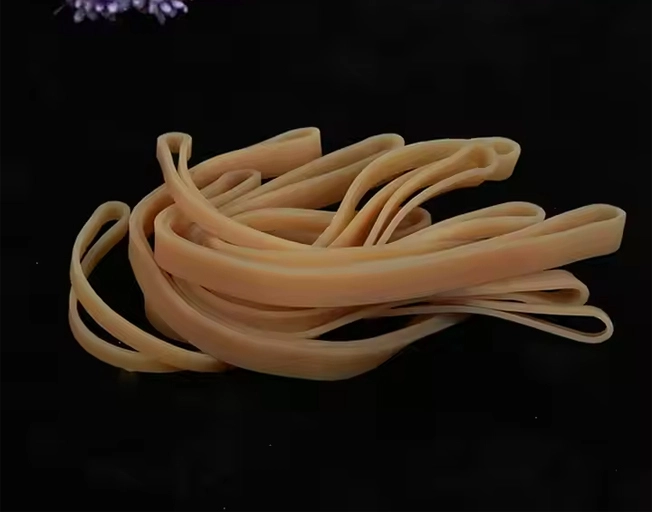
Band width should reflect stem sensitivity, bouquet weight, and handling intensity. Narrow bands may suit small, firm-stem bunches under moderate tension. Medium-width bands suit mixed bouquets. Wide bands are more appropriate for large hand-tied bouquets, soft stems, or lines where bunches are lifted repeatedly. Width must still be balanced against visibility and application speed.
Match Elasticity to Holding Force
Elasticity determines how easily the band expands; rebound determines how effectively it maintains grip. Excessively stiff bands slow operators and increase compression. Weak rebound may allow relaxation during storage. A procurement specification should request working-extension data or approved physical samples rather than relying only on terms such as “high elastic.”
Compare Materials Under Actual Conditions
Natural-rubber and latex-based bands suit applications prioritizing elasticity and rebound. TPU or TPR options may be considered when a project requires particular color, surface, or compound characteristics, but material names alone do not guarantee floral performance. Comparisons should use the same bouquet diameter, wrap count, wet exposure, cold-storage duration, and handling cycle.
Choose Color for Presentation and Workflow
Color is an aesthetic and operational specification. Neutral, translucent, natural, or foliage-compatible shades reduce visual interference when the binding point remains visible. Strong colors can support batch coding, stem-length grading, production shifts, or destination sorting when hidden by sleeves or wrapping. Color approval should include wet and cold samples.
Selecting Band Size for Different Bouquet Diameters
Measure the Actual Binding Point
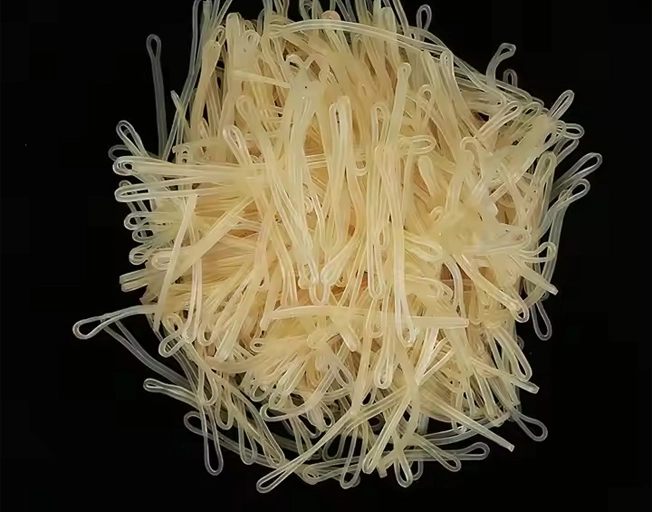
Flower count is an unreliable sizing basis because stem thickness varies. Measure the compressed bouquet diameter at the intended binding point. Working circumference can then be calculated as:
Working circumference = bouquet diameter × 3.14
The supplier’s relaxed band circumference or flat length can be compared with this value to determine expected extension and wrap count. This creates a repeatable specification for flower bouquet rubber bands wholesale purchasing.
Use Diameter Groups for Production Control
A practical line can classify bouquets into small, medium, and large diameter groups, with an approved band code for each. Small bunches require slippage checks; medium bouquets require balanced grip; large bouquets need strength for lifting, sleeving, and vibration. Exact dimensions should come from measured production samples.
Validate the Commercial Cycle
Bulk rubber bands for florists should pass room-temperature application, mist exposure, cold storage, removal from refrigeration, handling simulation, and final stem inspection. Acceptance criteria can include no breakage, no significant slip, no deep indentation, acceptable color visibility, and consistent application time.
B2B Procurement Checklist for Floral Rubber Bands
Product and Quality Requirements
A purchase specification should include material or compound, relaxed dimensions, width, thickness, color tolerance, stretch or pull requirements, packaging format, and sampling method. Lot consistency matters because size or rebound changes can alter wrap count and stem pressure. Incoming inspection can compare dimensions, visual condition, elasticity, breakage rate, and retained approved samples.
Supply and Customization Requirements
Wholesale buyers should assess production capability, OEM/ODM support, sample approval, quality monitoring, export experience, lead-time control, and after-sales response. The official factory information reviewed for this article describes production lines, product inspection, customized services, export delivery experience, and foreign-trade support. These capabilities matter for private-label packaging, custom sizes, and color-controlled repeat orders.
FAQ
What Width Is Suitable for Delicate Flower Stems?
A wider contact surface is generally preferable for soft, hollow, or easily marked stems, provided band size and elasticity do not create excessive compression. Final approval should follow marking tests on actual flower varieties.
Why Do Bouquet Bands Slip in Wet Conditions?
Moisture can reduce rubber friction on a contacted surface. A wet-bundle test should assess width, relaxed size, compound, wrap count, and binding position.
Can One Band Size Cover Every Bouquet Diameter?
One size may cover a limited operating range, but very different diameters often create either excessive tension or inadequate grip. Diameter groups with approved band codes provide better control.
How Should Cold-Storage Performance Be Evaluated?
Applied bands should pass the facility’s normal refrigeration duration and then be inspected during warming and handling. Breakage, permanent relaxation, slippage, surface changes, and stem indentation should be recorded.
Which Information Is Needed for a Custom Quotation?
A complete request normally includes bouquet diameter range, flower types, binding position, preferred material, band dimensions, color, expected stretch, packaging format, annual volume, sample quantity, and destination-market requirements.
Source Factory-Direct Floral Bundling Solutions
Build a Specification for Wholesale and Production Use
VIET-Y itself is a rubber-products manufacturer and rubber-band factory established in Yiwu, China, with published capabilities in rubber-band production, OEM/ODM customization, quality monitoring, export delivery, and international trade support.
Floral wholesalers, supply distributors, and bouquet-processing factories can can contact VIET-Y to submit diameter ranges, stem types, wet and cold-storage conditions, target colors, packaging requirements, and forecast volumes to VIET-Y for sample development and a factory-direct quotation.

Latest News
-
Jun. 04, 2026TPU Elastics Safety & Compliance for B2B Food and Hygiene Packaging 2026VIET-Y offers high elastic food grade TPU rubber bands with FDA and EU compliance for food and hygiene packaging. Superior durability, abrasion resistance and safety. Contact us for samples and bulk custom solutions.
-
Jun. 04, 2026Customizable Rubber Bands: Key to B2B Organization and Efficiency in 2026VIET-Y specializes in high-elasticity natural rubber bands and customizable elastic bands for B2B logistics, offices, and supply chains. Durable, color-coded solutions with strong rebound deliver reliable performance and workflow efficiency. Contact us for a free quote.
-
May. 28, 2026Reliable Wholesale Rubber Band Suppliers: B2B Sourcing Guide 2026VIET-Y offers reliable wholesale rubber band solutions with strict quality control, OEM/ODM capability, timely delivery, and ISO certification. This B2B sourcing guide helps buyers select trusted suppliers for sustainable supply chains in 2026.


