

TPU Elastics vs Natural Rubber Bands: Key Differences for B2B Buyers in 2026
Time : Apr 30, 2026 View : 322
Introduction
In 2026, B2B buyers face tricky supply chains that shift quickly. They need stretchy materials that mix good results, fair prices, and green practices for tying up items, holding things secure, and special jobs. The worldwide industrial packaging field keeps pushing for tougher builds and eco-friendly rules. Picking between TPU elastics and natural rubber bands goes beyond just tech choices. It turns into a smart business move.
The main contrasts in TPU elastics versus natural rubber bands help make smart picks that fit exact industrial demands. VIET-Y shines here with a wide range of goods. This covers the RUBBER SERIES, LATEX SERIES, TPU SERIES, TPR SERIES, and hair band products. All these aim for top-notch B2B work. Zhejiang VIET-Y Rubber Products Co., Ltd. sits at No. 13 Qingxi East Road, Qingkou Industrial Zone, Jiangdong Street, Yiwu City. Started back in 2010, the company counts as one of China’s first factories making RUBBER BAND series items. A focus on putting customers first and pushing forward has earned a solid name for steady quality and trust in markets around the world.
This piece digs into the basic contrasts between these two stuffs. It looks at their stretch patterns, toughness against strain, price setups. Plus, it shows how they match up with supply chain goals in 2026.
Overview of Natural Rubber Bands
Custom natural rubber bands with strong stretch come in blended shades like red, yellow, green, or plain black bracket designs. They handle tough tasks in office gear, money handling packages, everyday tying, and factory work. Sizes often run to 60mm waterproof types or odd shapes with hook styles for heavy-duty spots.
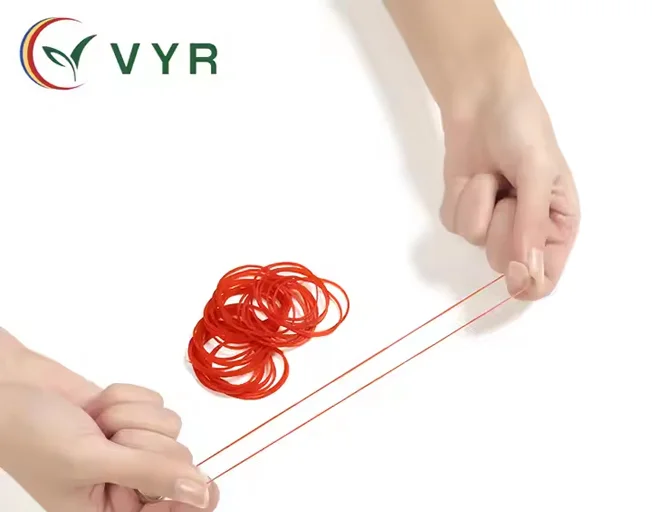
From the material side, top-grade natural latex and rubber give solid pulling power and sure bounce-back. Tight checks on getting raw stuff, making processes, quality looks, and more keep every band stretchy, tough against scrapes, and long-wearing. So, they work well in big-run setups where steady action beats out super hardness.
Overview of TPU Elastics
Thermoplastic polyurethane (TPU) elastics get built for focused B2B tasks. These need lasting resistance to wear over time. VIET-Y’s TPU series has items like the “Best Selling Girls TPU Hairband 4024 Burgundy Wholesale High Quality Color Hairband or Any Use.” This shows how the stuff stretches past everyday items into factory uses.
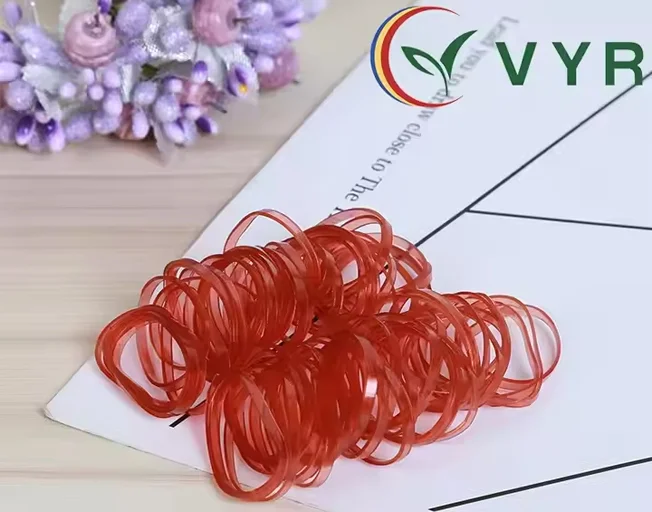
TPU delivers firm pull force and top-notch stretch comeback. It stays bendy through many stress rounds. Its fight against getting old suits busy or rough spots, like putting lines or food-safe closing setups. The company calls its TPU bands “high toughness” and “environmentally friendly, nontoxic, anti-aging.” This backs up needs for safety and long runs.
Key Differences Between TPU Elastics and Natural Rubber Bands
|
Property |
Natural Rubber Bands |
TPU Elastics |
|
Elasticity & Recovery |
Strong stretch with fast snap-back; great for all-around tying jobs |
Steady action through many pulls; holds form under pull |
|
Durability & Wear Resistance |
Good pull power but fair scrape toughness |
Better scrape toughness; takes rough treatment |
|
Cost & Reusability |
Cheap for big batches; simple to swap out |
Steeper start price but longer use span |
|
Environmental Profile |
From plant sources that renew |
Built to last cuts down on trash often |
Both stuffs aid smooth B2B work with reuse and solid staying power. Natural rubber stresses cheap value for usual tasks. TPU aims at drawn-out life in hard spots.
B2B Applications and When to Choose Each
Natural Rubber Bands:
- Industrial packaging
- Warehousing
- Office organization
- Financial document binding
- General-purpose bundling
Options for tweaks, like mixed shades or black brackets, let them fit branding or sorting needs. Take a warehouse in Ohio last year. Teams there used colored bands to sort parts fast, cutting mix-ups by 20%.
TPU Elastics:
- Food-contact seals
- Hygiene products
- Medical compression garments
- Prosthetics
- High-wear assembly lines
These hold up where daily pulls happen under machine strain. For instance, a food plant in Texas switched to TPU for seals. It lasted twice as long as rubber, saving on swaps during busy shifts.
Complementary Use:
B2B buyers mix both in one chain plan. Say natural rubber tackles basic packing. Then TPU handles special areas, like clean rooms or auto-sorting setups. VIET-Y’s TPR series brings extra bend. It shows up in tiny colored rubber bands or fun rainbow bracelets. This links looks for buyers with factory-strong trust.
2026 Supply Chain Trends and Material Alignment
With near-shoring picking up in Asia-Pacific spots, both stuffs help build tough logistics plans. They offer simple parts that work with machines and cut stoppage chances.
Green ways stay key in buying rules everywhere. Reports show 70% of firms now track material life cycles for reports.
- Natural Rubber:Fits trends in plant-based gets and loop economy setups.
- TPU:Cuts replace needs with its long build. It meets clean certs common in food areas.
Fit with machines counts too. Both leave no marks on robot hands or belt lines in auto stacking jobs. One auto maker noted zero slip issues after testing both in trials.
Best Practices for B2B Buyers in 2026
Selection Criteria
Pair stretch level to load kind. For heavy tying that needs quick bounce: pick natural rubber. For repeat move systems wanting staying power: go with TPU elastics. Weather hits, like hot-cold shifts or dampness, call for picking right strength levels. A Midwest factory learned this the hard way after moisture wrecked standard bands in storage.
Integration Strategies
Custom work from OEM/ODM proves key in bulk buys. A pro design team crafts fresh items. Plus, OEM & ODM custom services stand ready. Shade coding by team or load type smooths storage when linked to digital stock tools. This setup helped a logistics firm trim search time by 15% last season.
Supplier Evaluation
Buyers ought to seek sellers that give:
- Factory-direct wholesale pricing
- Reliable lead times
- Proven export experience
Years of shipping out guarantee orders hit on schedule. Steady ways beat hunting rock-bottom prices. VIET-Y sticks to this by skipping “blindly pursuing price but abandoning consistent quality.”
Measuring ROI
Main gauges cover:
- Bundling time per unit reduction
- Product damage rate decline
- Tensile retention after multiple uses
- Total cost per shipment over lifecycle
Watching these numbers shows if moving from natural rubber bands to TPU elastics, or the other way, brings real shop wins. Data from a 2025 survey showed 40% of users saw cost drops after blending both.
Conclusion
The main contrasts in TPU elastics and natural rubber bands give B2B buyers sharp tools for top logistics by 2026. Rubber brings stretch in bulk. TPU gives grit under push. Both aid green pledges that shape buying rules now.
Checking both in VIET-Y’s full lineup lets businesses set up strong nets. These adapt fast yet keep costs in check over years.
Inquiries regarding product specifications, OEM/ODM customization, or bulk procurement may be directed to VIET-Y for further assistance.
FAQs
Q1: What are the primary differences in elasticity, tensile strength, and abrasion resistance between natural rubber bands and TPU elastics for industrial B2B applications?
A: Natural rubber bands offer excellent stretchability with quick recovery suited for general bundling tasks, while TPU elastics maintain shape under constant tension with superior abrasion resistance ideal for repetitive-use environments.
Q2: How do natural rubber bands and TPU elastics compare in terms of reusability and cost-effectiveness for high-volume supply chain operations?
A: Natural rubber bands remain cost-efficient due to lower unit prices suited for bulk packaging; however, TPU elastics extend service life significantly—reducing replacement cycles despite higher upfront costs.
Q3: In which B2B scenarios do natural rubber bands or TPU elastics provide the most suitable performance?
A: Natural rubber excels in warehousing or office organization where flexibility is key; TPU performs best in food-contact manufacturing lines or medical compression products requiring durability against wear.
Q4: How do TPU elastics and natural rubber bands support 2026 sustainability goals?
A: Natural rubber contributes through renewable sourcing from latex trees; TPU supports waste reduction by lasting longer before needing replacement—both aligning with corporate sustainability reporting frameworks.
Q5: What criteria should B2B procurement teams use when evaluating suppliers like VIET-Y for OEM customization?
A: Focus on proven export track records, consistent product quality monitoring systems meeting international standards, flexible OEM/ODM options, and timely delivery backed by strong customer support teams experienced in global trade logistics.

Latest News
-
Jun. 04, 2026TPU Elastics Safety & Compliance for B2B Food and Hygiene Packaging 2026VIET-Y offers high elastic food grade TPU rubber bands with FDA and EU compliance for food and hygiene packaging. Superior durability, abrasion resistance and safety. Contact us for samples and bulk custom solutions.
-
Jun. 04, 2026Customizable Rubber Bands: Key to B2B Organization and Efficiency in 2026VIET-Y specializes in high-elasticity natural rubber bands and customizable elastic bands for B2B logistics, offices, and supply chains. Durable, color-coded solutions with strong rebound deliver reliable performance and workflow efficiency. Contact us for a free quote.
-
May. 28, 2026Reliable Wholesale Rubber Band Suppliers: B2B Sourcing Guide 2026VIET-Y offers reliable wholesale rubber band solutions with strict quality control, OEM/ODM capability, timely delivery, and ISO certification. This B2B sourcing guide helps buyers select trusted suppliers for sustainable supply chains in 2026.


